MUSIC OF PERFECTION: RENAISSANCE REQUIEMS
BY PALESTRINA AND VICTORIA
For all the intellectual, artistic, and cultural changes which swept through the world during the Ars Nova and the Renaissance, the Requiem Mass continued to be sung during these periods in medieval chant. Perhaps because of the seriousness and dignity of the liturgical occasions which called for a Requiem, its music remained more conservative for a longer historical time than any other liturgical music.
Even Requiems which begin moving toward the overlapping voices of polyphony, are only partially polyphonic. They require portions of the Mass not set by the composer to be sung in the chant version. This is especially true of Palestrina’s Requiem. In fact, the only portion of the Proper of the Requiem which Palestrina composed was the Offertory. In addition to this, he wrote only the Kyrie, Sanctus and Agnus Dei of the Ordinary of the Mass. Each of those three prayers is, moreover, as was the practice, based on the corresponding music of the chant Requiem. Palestrina, in each case, uses that basis or cantus firmus to develop his music into smooth, rich, beautifully flowing and overlapping polyphony. But the Introit, “Requiem aeternam dona eis, Domine,” the prayer from which the Requiem Mass derives its very name would, in Palestrina’s setting, be sung entirely in medieval chant.
Giovanni Pierluigi da Palestrina (1526-1594) lived and worked in Rome during the time of the Council of Trent (1545-1563). That Council froze the liturgy for the first time ever – in a sincere and dramatic attempt, as the Council Fathers saw it – to protect the faithful from the errors of the Protestant Reformation. It insisted on Latin as the only liturgical language and scorned the vernacular. It insisted on Gregorian Chant and barely allowed the new music of Renaissance polyphony. The Fathers of the Council of Trent were afraid that prayer texts could easily get lost in polyphony with all its overlapping melodies and the consequent confusion of different words being sung at the same time. The monophony of chant was so much clearer, so much more supportive of the prayer text, so much more prayerful. And so, understandably in their difficult times, thought the Fathers of the Council of Trent.
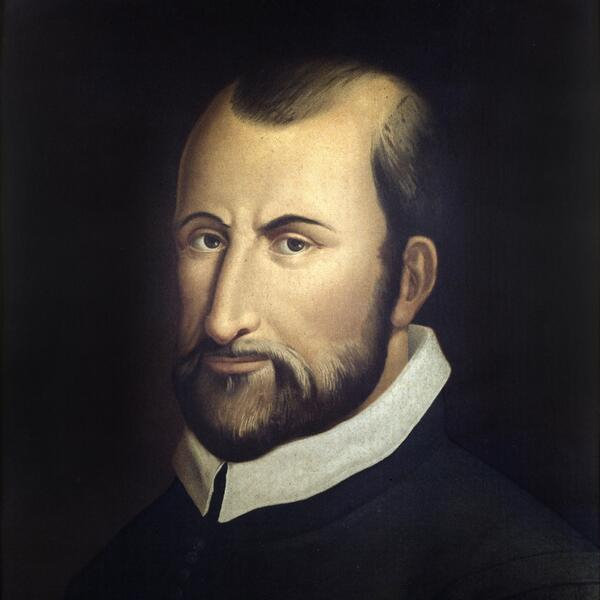
Palestrina who composed music and conducted the choir in the Pope’s own Sistine Chapel was a faithful son of that Council. And legend has it that it was only upon hearing Palestrina’s polyphony at Council Masses, that Council Fathers voted to allow the new music at all.
Tomas Luis de Victoria (1548-1611) was born in Avila in Spain. Avila was also the home town of St Teresa (1515-1582). Whether Victoria knew his “soul-sister” personally or not, his music sings with the same passionate intelligence of her prayers and ascetical writings and of, moreover, the mystically luminous and elongated figures of El Greco (who was probably born in the same year as Victoria).
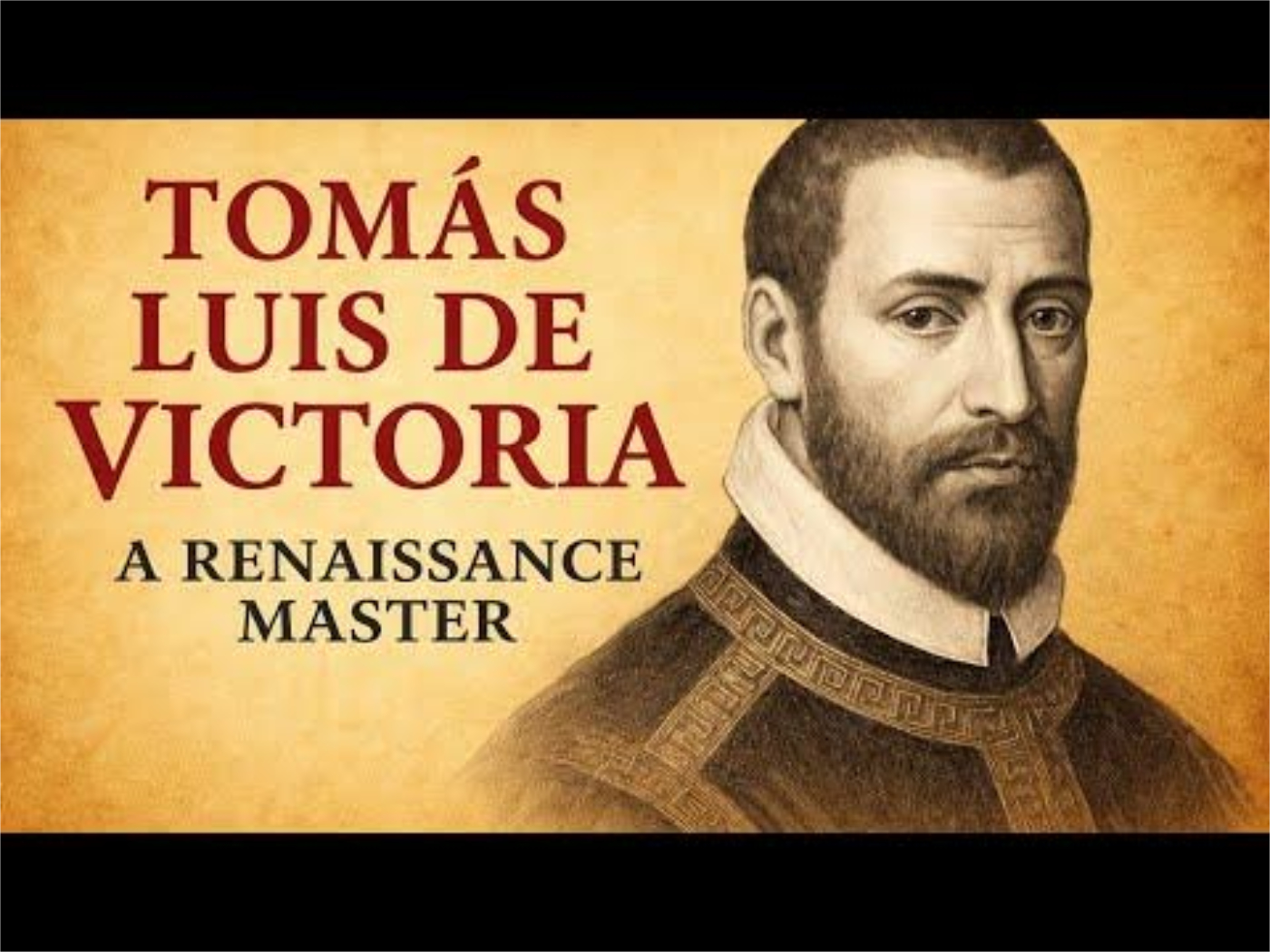
Victoria wrote his six-voice Requiem in 1603, eight years before his own death in 1611 . It is important to note that almost every section of Victoria’s Requiem is an alternation of phrases from the chant Requiem (Ed. Note: here presented only as Kyrie) with his own polyphonic phrases,s and that his own polyphonic phrases are based upon canti firmi (musical foundation melodies) from that chant Requiem. Victoria’s Requiem is thus magnificently contemporary music rooted, solidly and rather graphically, in the most magnificent liturgical music of the past.
There is one phrase in the text of the Requiem Mass which is used four times: in the Introit, in the Gradual, in the Communion and in the Libera Me. The phrase is one we have already seen in our consideration of the chant Requiem: “Requiem aeternam dona eis, Domine, et lux perpetua luceat eis ….Eternal rest grant unto them, O Lord, and let perpetual light shine upon them.” Victoria left the first two words in chant for the Introit; the first word in chant for the Gradual; the first five words in chant for the Communion. In the Libera Me, at the end of the Mass, for the first time, he sets the entire phrase polyphonically. And the prayer comes as a beautiful consummation. It is beautifully calm and confident, peaceful and prayerful.
Surely there has never been any music that is more polished perfection than the sacred polyphony of the Late Renaissance, the music of composers like Palestrina and Victoria. Here, at the end of his Requiem, as Victoria alternates polyphony with monophony, he expresses the faith of a late sixteenth-century Spanish priest with the skill of a great Late Renaissance composer. The faith that Victoria expresses so skillfully in his Requiem Mass, then, is like the faith of the Fathers of the Council of Trent. It is like the faith of St Ignatius Loyola, St. Teresa of Avila and St. John of the Cross. It is like the vision of El Greco.
Victoria’s is a faith which believes in a God who will have mercy and in a Church which is a channel of that mercy. Victoria’s is a vision which sees that there shall be “requiem aeternam… sempiternam… rest eternal …forever…” because God has promised us and it shall be so. Victoria’s is a music which recognizes and represents God who is present to us in the wonderful, gentle, whispering wind.