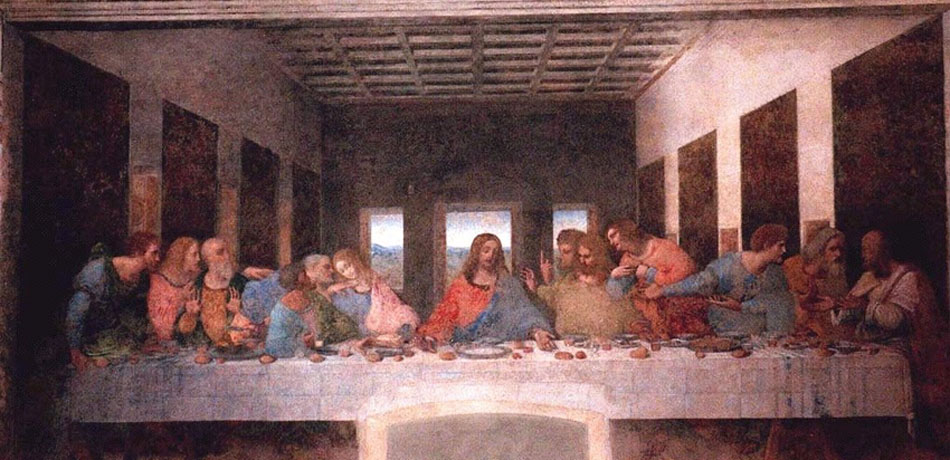
The great Baroque Italian sculptor and architect, Gianlorenzo Bernini (1598 1680) described the sweeping colonnades which he designed for the plaza of St. Peter’s in Rome as being “like the mother church embracing the world.” Baroque architects, like Baroque composers, thought big, monumentally big. And Baroque sculptors, like Baroque composers, created works that are intensely emotional, flowing, intricate, and elaborate.
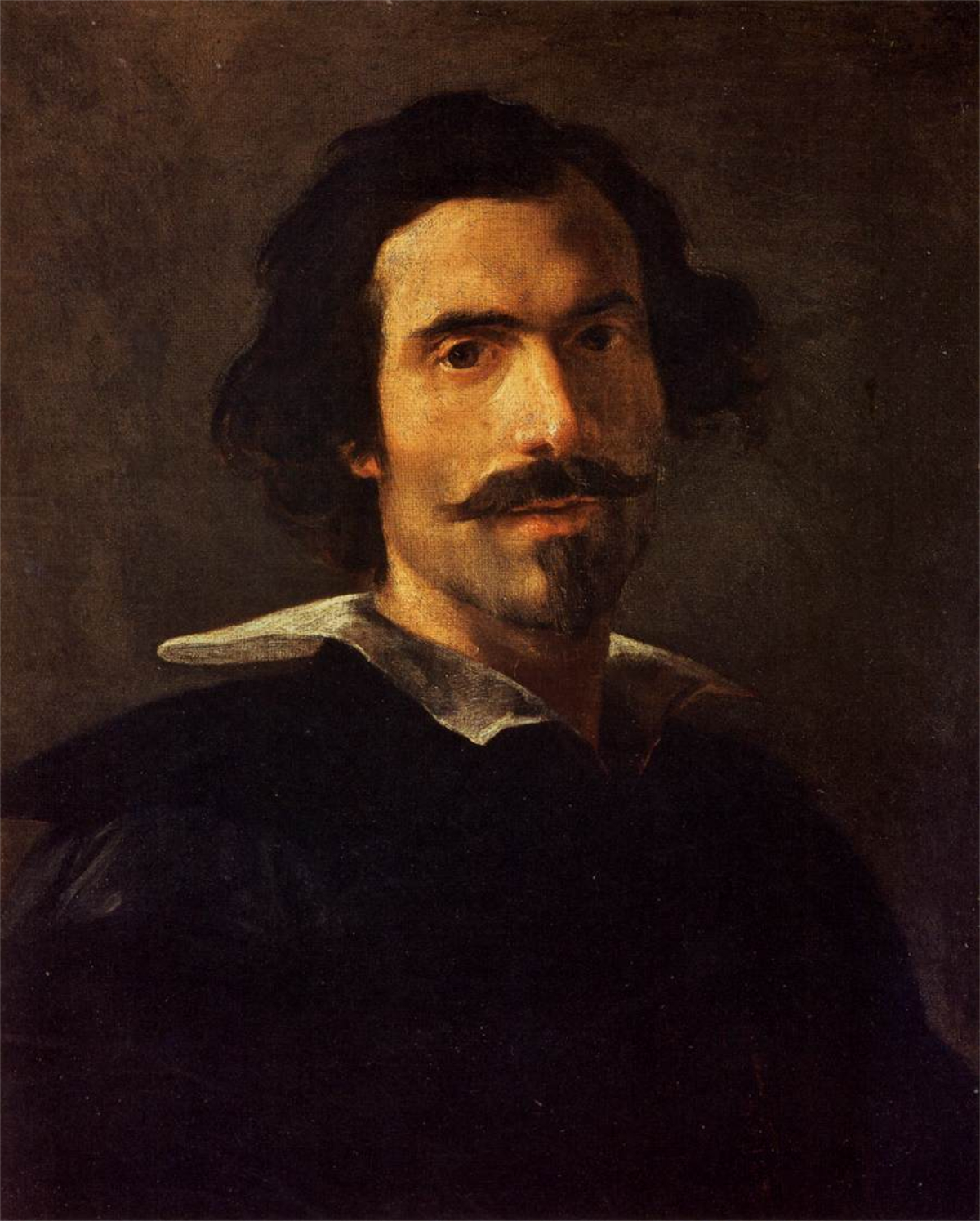
Bernini’s magnificent sculpture of “The Ecstasy of St. Teresa” could easily be a companion piece to the “Sanctus” from Bach’s “Mass in B Minor” which we have just experienced. Both works move us powerfully into both the joy and the pain of union with God who alone is “holy, holy, holy” but who calls us into intimacy, who fills us with grace, who loves us and, in that very act of loving us, makes us holy.
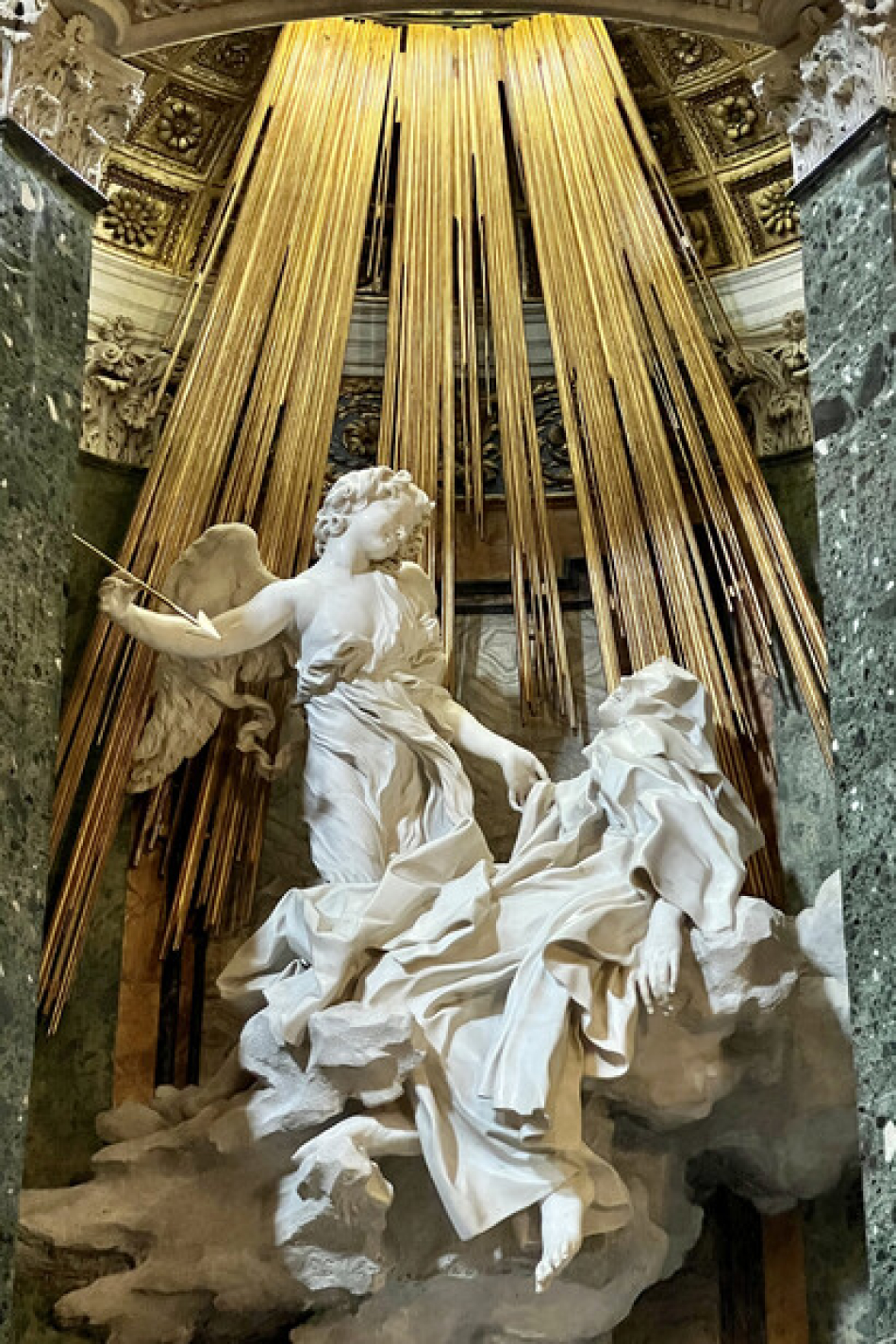
In this Baroque work of art, created between 1645 and 1652, Bernini depicts St. Teresa swooning ecstatically upon being pierced with a flaming, golden arrow by a sweet, smiling angel. Angels are manifestations of Gods presence to mortals here below. This sweet, smiling angel indicates that God is present to Teresa as one who loves her personally and passionately. There is nothing threatening in the angel’s expression or bearing – except perhaps for that arrow!
St. Teresa’s facial expression is rhapsodically dramatic. Her head is thrown back. Her eyes are closed Her mouth is open. Her hands and feet hang limply as her garments swirl
about her collapsed body in vibrant, rhythmic swirls. Bernini makes as dramatic a contrast between the flesh of St. Teresa’s body and the fabric of her garments as Bach made, in his “Sanctus,” between the solemnity of the “Benedictus” and the dancing delight of the “Osanna.” Dramatically contrasting emotions are the heart of Baroque music and art.
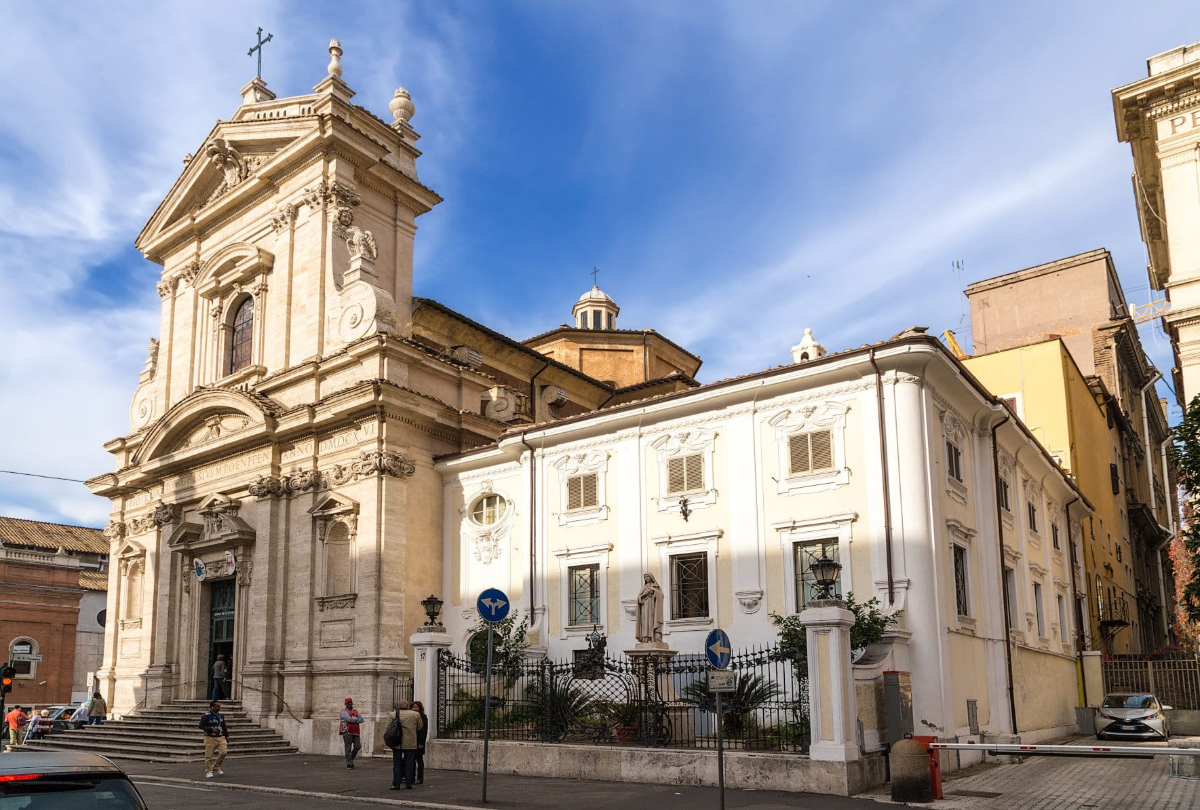
Bernini designed this work for a side chapel in the small church of Santa Maria della Vittoria in Rome. When we experience “The Ecstasy of St. Teresa” in its own setting, as the sculptor envisioned it, we see that the huge marble work appears to float somewhere in space. It seems so light that it requires no support at all, so light that it has no support at all.
The rocks under St. Teresa seem to have become clouds. They are floating up into the sky. St. Teresa is floating up into the sky. Her body seems to have collapsed, to have gone limp. But it is moving up.
And the fabric of her garments does not fall the way fabric ordinarily falls. No, it whirls like wind, alive and moving. Great golden rays of light shine down powerfully from above, piercing the scene, mysteriously enlightening and explaining the experience, glistening with a bright intensity from an invisible source of light.
The angel’s left hand holds open the flowing garments of St. Teresa just above her heart. The angel’s golden arrow gleams like the rays of light coming down from heaven. It is still poised, gently, lightly, effortlessly in the angel’s right hand The tips of the angel’s wings are feathered But the angel’s garments whirl like the woman’s. And the angel’s flesh is as soft and sensuous as the woman’s. The woman, Teresa, the contemplative Carmelite nun is one with her God
In the 13th Century, St. Francis of Assisi shared the wounds of Jesus, his crucified Lord Jesus, in his hands and his feet and his side. St. Francis experienced the stigmata. St. Francis suffered and enjoyed intimate union with Jesus.
The 16th-century mystic, St. Teresa, in her own way, as Bernini reveals, experienced no less.
In 1991, in his beautiful novel entitled “Mariette in Ecstasy,” Ron Hansen describes a young, cloistered nun who experiences the stigmata in the convent of the Sisters of the Crucifixion in upstate New York. The time is the early 1900’s. The concerned but confused nuns variously respect, suspect, envy, admire, doubt, demean, and finally denounce and expel Mariette .
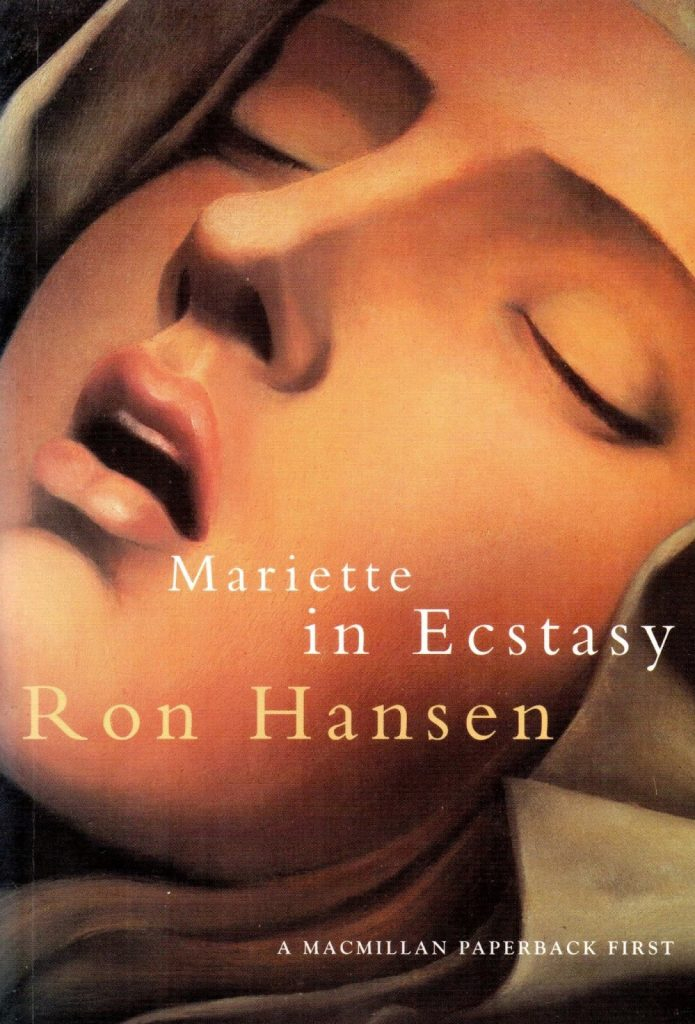
Alone and lonely in her old family home, thirty years later, Mariettte still experiences the pain of the wounds of Jesus but none of the ecstasy of union with him. She is in what St. Theresa and St. John of the Cross would describe as the ‘Dark Night of the Soul’. Mariette does not know what to do. She does not know how to please her Lord. She believes in her heart that he still loves her, that he has always loved her and will always love her. But she wonders what she is to do. And then, finally, when she tries to know his will, she says, “his kindness floods me, his great love overwhelms me, and I hear him whisper, Surprise me.”
The face of the nun on the cover of the modern novel is the face of St. Teresa from Bernini’s Baroque sculpture of “The Ecstasy of St. Teresa.”
And God in the gentle wind continues to surprise us.