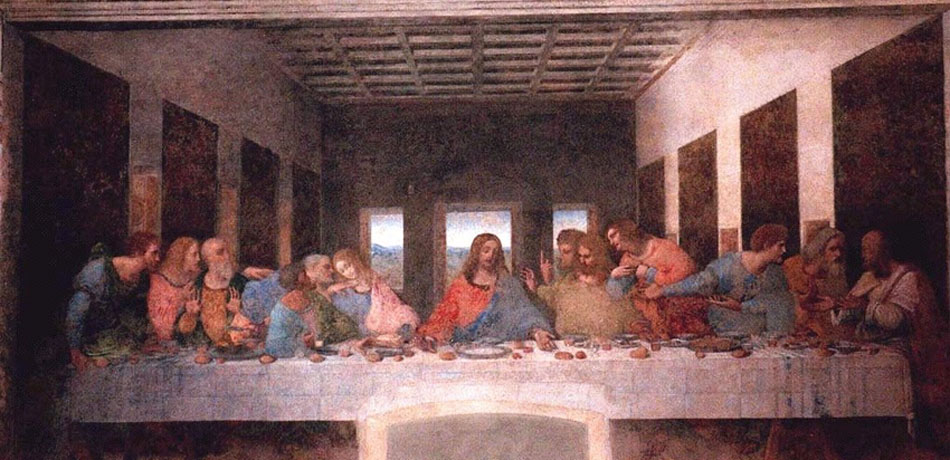
Michelangelo Merisi da Caravaggio (1573-1610) painted scenes from the Scriptures with such personal insight and intensity and with such dramatic realism and naturalness that he might easily be placed in the 19th Century Romantic Period instead of the highly ornamented Baroque Era. His art seems to resonate more with the music of Berlioz and Verdi than with the music of Bach and Handel. In fact, Caravaggio dismissed most of the ideals of the Baroque and irritated most of the critics of his day with his naturalism. In a strange and powerful way, Caravaggio moves us and sacred art into a new world.
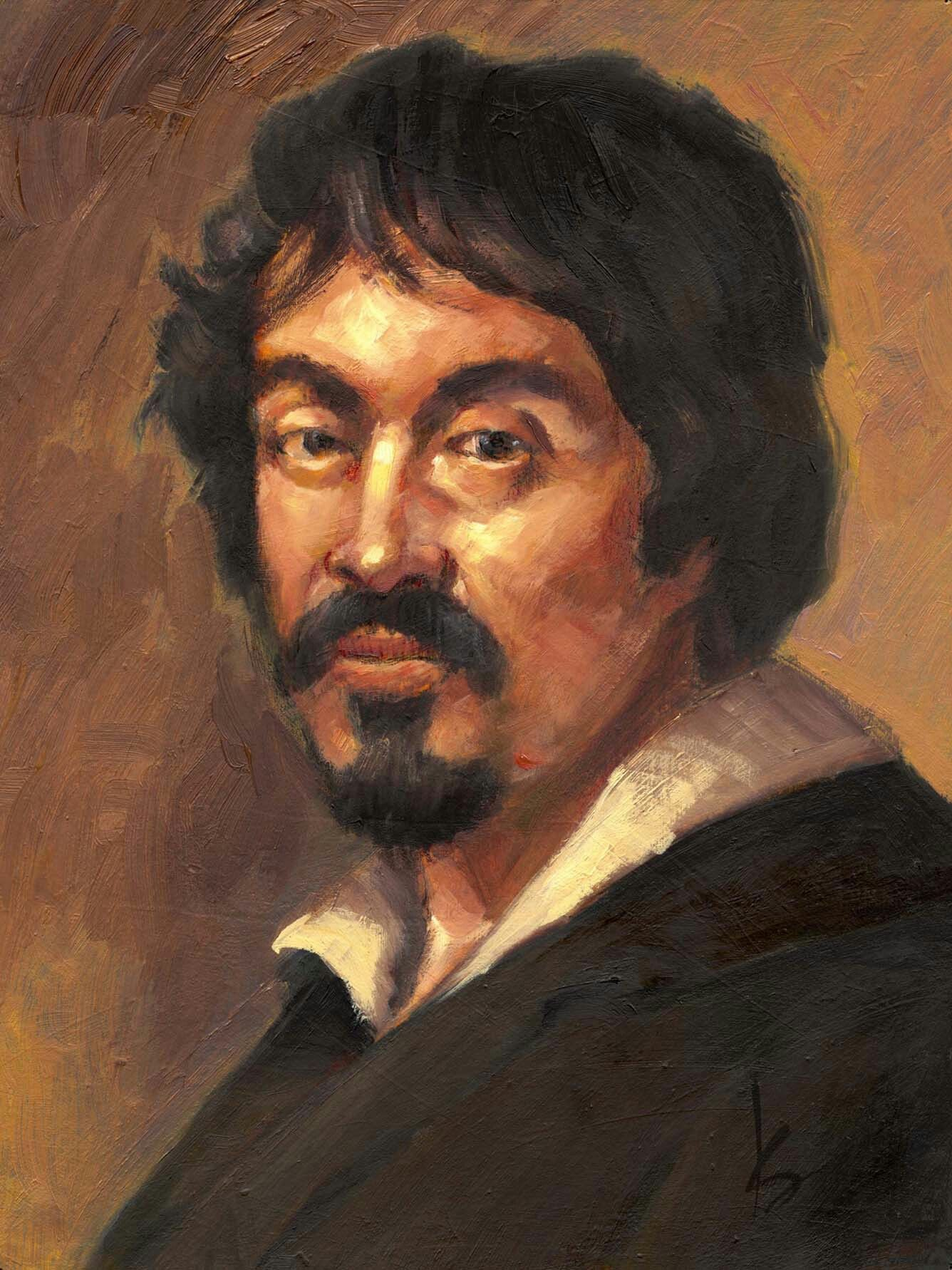
Monks who had commissioned Caravaggio to paint “The Death of the Virgin‘ were horrified to receive the finished work This was no idealized woman. This was no romanticized death. In Caravaggio’s view of the scene, Mary’s body looks old and worn out. Her bare feet, sticking out of a very messy bed, are dirty. The apostles gathered around her deathbed look like ordinary men from the street and they seem to be crying real tears, feeling real grief. The monks who commissioned the work were shocked to hear rumors that the volatile and unpredictable young artist actually used, as a model for the Holy Mother of God, the bloated body of a prostitute dredged up from the river. They, indignantly, rejected the work. We are left to wonder whose faith was more real – and more like our own – the monks’ or the artist’s? Which eyes of faith saw the scene more realistically?
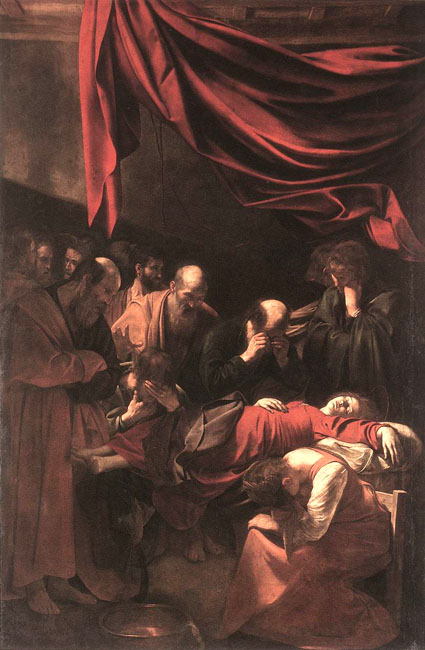
The same questions can be asked about Caravaggio’s depiction of St. Jerome writing the Latin Vulgate of the Scriptures. Caravaggio gives us a very old man, bald and skinny, with failing eyesight. This was not the way people wanted their saints to look. And so another painting was, of course, indignantly rejected.
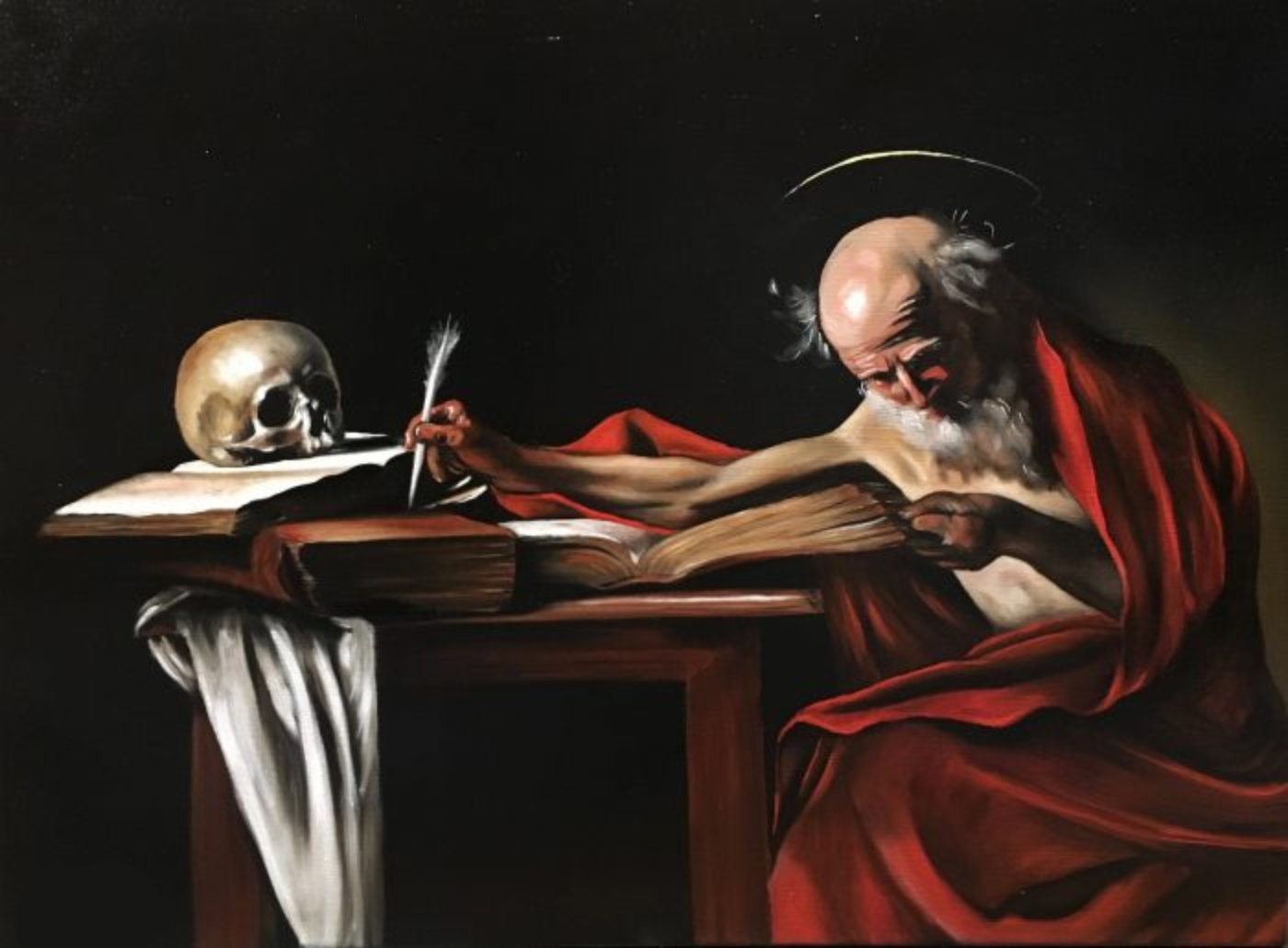
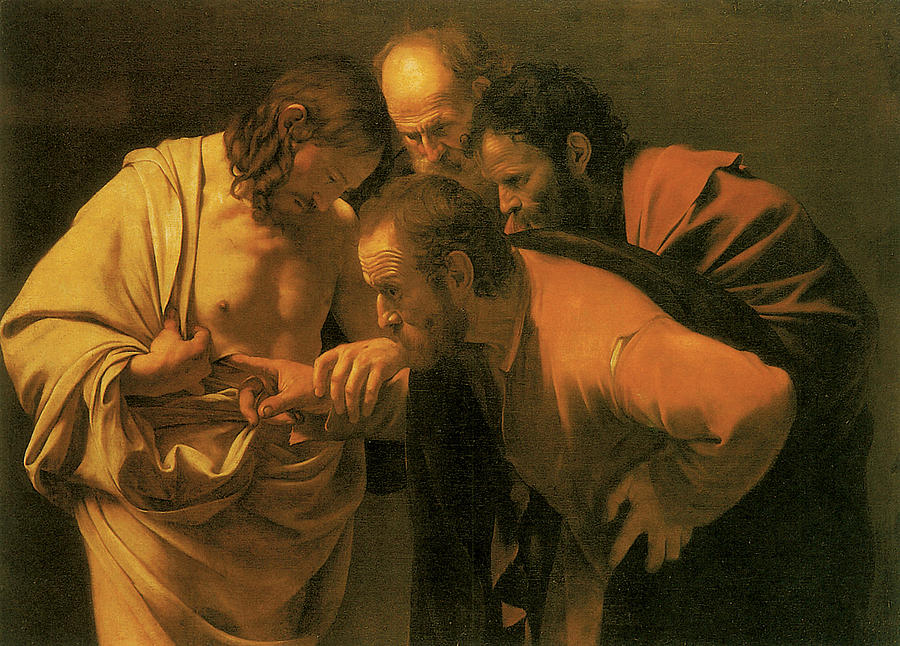
Caravaggio shows us St. Thomas‘ finger actually stuck into the wound in the side of the Risen Jesus. The other Apostles gathered around look like tired, confused fishermen. Why doesn’t Caravaggio make them look the way saints are supposed to look? Why does he paint this scene of Thomas and Jesus so literally, exactly the way the Scriptures describe it, instead of in a more dignified and reverent way, the way we would like to imagine it?
When the body of Jesus was taken down from the cross, was it ethereal, vaporous protoplasm or was it the heavy dead weight of a real human corpse? Caravaggio literally puts himself back into the scene and realistically, faithfully imagines what it must have been like, what it must have felt like. We look at the sad face of Joseph of Arimathea in Caravaggio’s “Deposition” and we see the face of Caravaggio himself. And, even more surprisingly, he is looking at us. Something in his face is inviting us to come closer, to come into the picture, to help. In fact, if this Joseph/Caravaggio were to say just one word, that word would be “help.” The body of the dead Jesus is so heavy. The hearts of the mourners are so heavy.
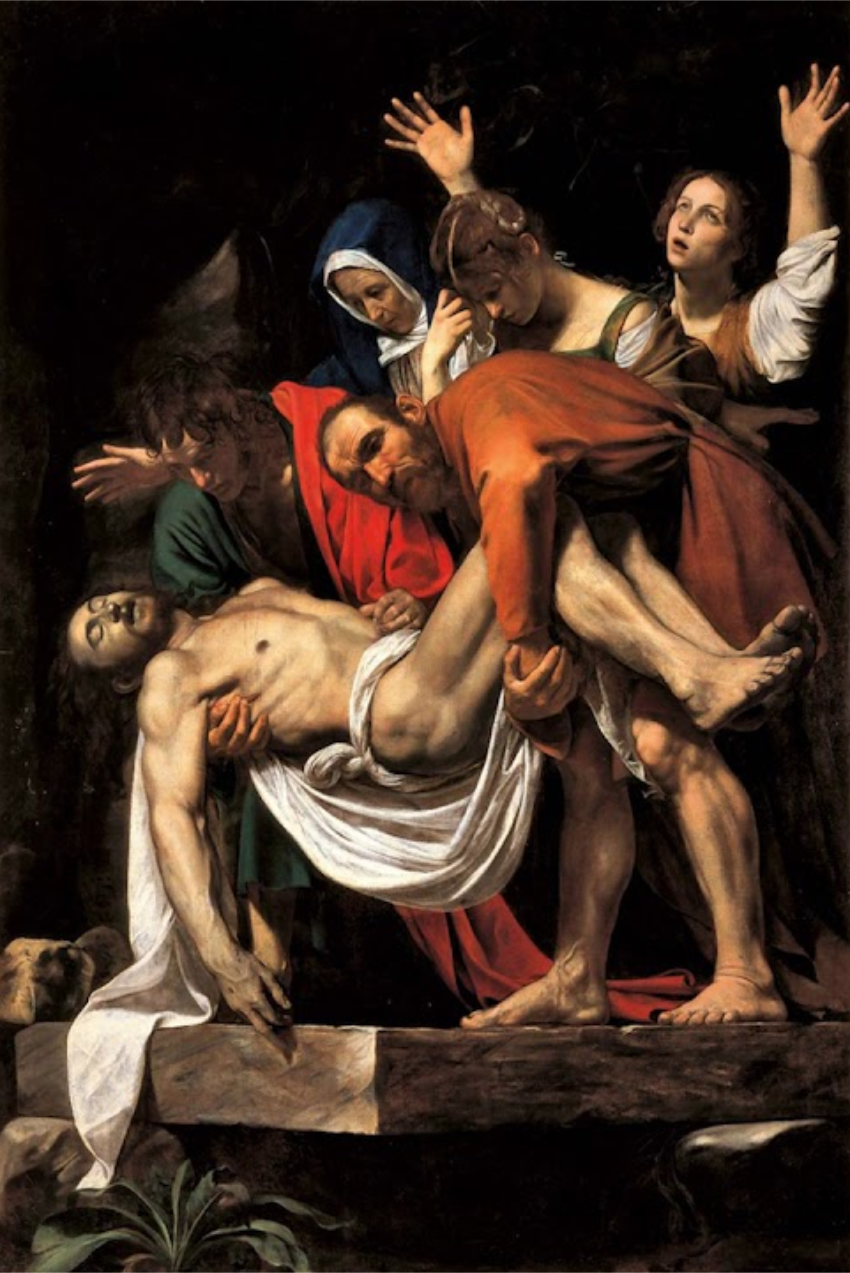
The heavy slab of stone below, with its sharp point sticking straight out at us, also brings us into the painting. We, the viewers, seem, in fact, to be needed in this picture. Everyone else is on the other side, the far side of the body of Jesus. Mary, his Mother, is there contemplating her son’s face. Her expression is sad but calm. Her hand is raised in question and gift. John, the beloved disciple, is there, his fingers sinking into Jesus flesh, beneath his right arm, the same way that Mary’s fingers sink into her son’s flesh in Michelangelo’s Pieta in St. Peter’s.
Joseph of Arminathea is there on the far side of the body of Jesus. His sad, imploring face is Caravaggio’s sad, imploring face. We remember that Joseph of Arminathea’s face is Michelangelos’ face in Michelangelo’s Pieta in Florence. And this is not a coincidence. Caravaggio was named for Michelangelo and obviously loved and admired the man and his work. Joseph holds the body of Jesus but looks, imploringly, at us.
Mary Magdalene is there on the other side too. She who once washed the feet of Jesus with her tears and dried them with her long hair, she who wept at his feet as he hung for three tortured hours on the cross, she weeps still. Mary Magdalene loves Jesus. She would not know what love was had Jesus not looked at her and loved her. Now she looks at his dead body, and she loves him.
Mary Magdalene, Joseph of Arimanthea, the beloved disciple John and the Mother of Jesus he has now taken as his own: everyone is on the far side. There is no one, here on the near side, to help hold the heavy body of Jesus. It seems to be falling. Joseph, with the face of Caravaggio, looks to us, through the eyes of Caravaggio, and seems to ask us to get involved, to help.
Caravaggio will not let us glance and walk away.
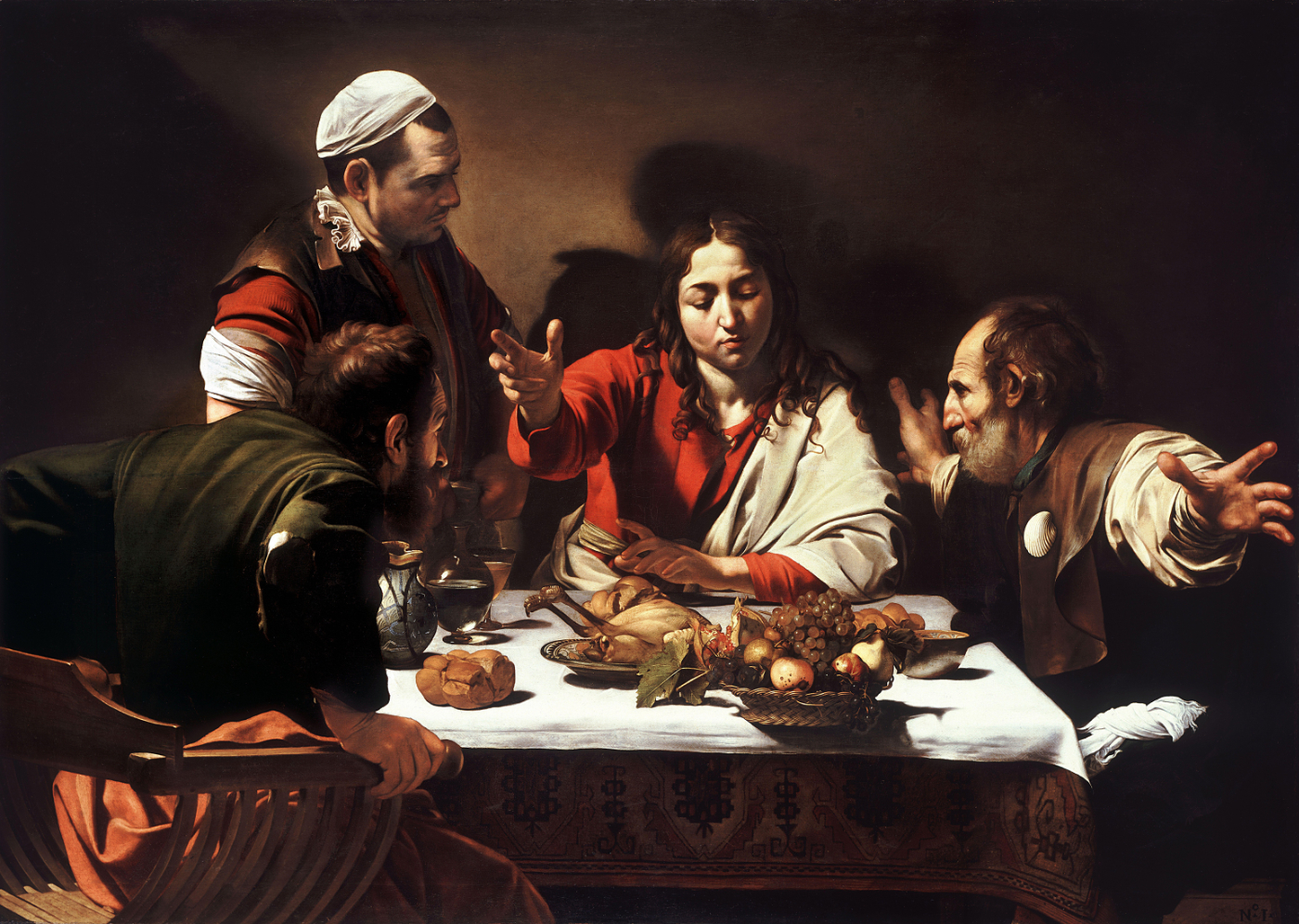
And he is equally insistent at “The Supper at Emmaus.” Caravaggio has digested the story Luke tells in Chapter 20 of his Gospel and pictures for us the high point of the narrative, the moment of discovery and recognition. Caravaggio has his characters leap out of the painting into our hearts as, simultaneously, he draws us into the scene.
Two disciples had been walking from Jerusalem to Emmaus. They were walking West towards the place where the sun would set. Their faces look as though their sun has already set – and set forever. The one person who had helped them know who they really were and how very close God was to them, how much God loved them and needed them to love one another, that one, wonderful person is dead. They had pinned all their hopes on him and now their hopes were crushed. Jesus had been crucified They could not believe it. They would never get over it. They talked as they walked to Emmaus. And they wept as they talked.
Suddenly, a stranger was walking along beside them. He asked them what was wrong. They told him about Jesus and how he had been crucified. The stranger reminded them about prophecies in the Scriptures, prophecies such as Isaiah’s Suffering Servant, despised and rejected, wounded for our offenses, a man of sorrows in whom there was no beauty. The three men shared stories about other prophecies and other promises. Together, they talked about the Messiah. Together, they talked about Jesus, the Christ. The hearts of the two disciples were burning within them. They could go on listening to this stranger forever. But the sun had become a huge red ball setting in the West just as they reached Emmaus. And, suddenly, the stranger was taking his leave of them.
The two disciples begged the stranger not to go, to stay – please – to share supper with them, to spend the night with them at this inn, since – look – the day was already spent. He smiled and agreed. And while they were at supper together, the stranger raised his hand and blessed the bread. Suddenly, their hearts and their bodies lept up to heaven and back. They knew. They understood. They believed. This stranger was Jesus! They recognized him in the breaking of the bread.
Caravaggio invites us to share this wonderful moment of recognition.
But Jesus in this painting does not look the way we would expect Jesus to look. This is a problem. Jesus looks too soft, too pudgy, bland, effeminate, ordinary. St. Mark tells us that Jesus after his resurrection appeared to his disciples “in alia effige… in another appearance.” And that makes sense. Otherwise, everyone would have recognized Jesus as soon as they saw him. We know from all post-resurrection accounts, that no one ever did. If Jesus had looked like Jesus, the two disciples on the road to Emmaus would have recognized the stranger immediately. They did not because he was, indeed, “in another appearance.”
Even so, why this appearance? Why, for example, is Jesus so young looking and completely without facial hair? We look at Jesus in Michelangelo’s “Last Judgment” in the Sistine Chapel and we notice that this risen, eternal Jesus is also without beard or mustache. We also notice that the hands and arms of Jesus in Michelangelo’s “Last Judgment” are in a similar position to the hands and arms of Jesus in Caravaggio’s “The Supper at Emmaus.” This, once again, does Michelangelo Merisi da Carravaggio pay homage to the great Michelangelo Buonarotti. And thus do both great artists depict a risen Jesus who looks different from the historical Jesus before his death on the cross.
We also notice, when we examine the hands of Jesus even more closely, that they are fascinatingly, even tantalizingly – held in such a way that it is impossible for us to detect whether or not there are marks from the nail-wounds in the hands. This clever and intriguing positioning helps maintain the suspense and increase the great surprise at the wonderful moment of discovery and recognition.
The disciple on our right, wearing the shell insignia of the pilgrim, throws his arms out in shock of recognition – and also, undoubtedly, in an allusion to the position of the arms of Jesus on the cross. The pilgrim’s worn old face is stunned. His surprise is palpable. So is the surprise of his companion on our left who is pushing back his chair as he is about to rise in joy and delight and amazement. Their clothes of the two disciples are shabby and patched. But, now, their hearts are mended. They are new creatures. They are alive. They are whole. They are born again.
The innkeeper has not a clue. He stands on the left alone and looks passively at this man blessing food on his table. His thoughts are the concerns of providing bed and board for strangers passing through. His hope is the hope of being paid well for his services. He misses the miracle of the moment. And, despite the light that bathes the scene from the upper left, the innkeeper’s shadow falls, not upon the risen body of Jesus but, strangely, upon the wall behind the risen Lord.
The food Jesus blesses includes a marvelous basket of fruit to our right. So precariously is it placed on the edge of the table that it looks as though it might fall off the table and into our laps at any moment. What we know, what we expect to stand solid and certain forever, may tumble and change at any moment. At any moment, like the two disciples, we may find ourselves in a whole new world where nothing is what we previously expected
Strangely, unexpectedly again, the fruit in the basket is not the fruit of Spring, the season in which the story takes place. It is the fruit of the FALL. Apples and figs remind us of Adam and Eve in the Garden of Eden. It is the fruit of the Redemption. Grapes for wine, and the bread behind the basket, remind us of the Eucharist and the words of Jesus, “Take this bread and eat it, for this is my body given up for you. Take this wine and drink it, for this is my blood poured out for you, the blood of the new and everlasting covenant.”
Once again, Jesus is recognized in the breaking of the bread.
Once again, God is discovered in the gentle wind.