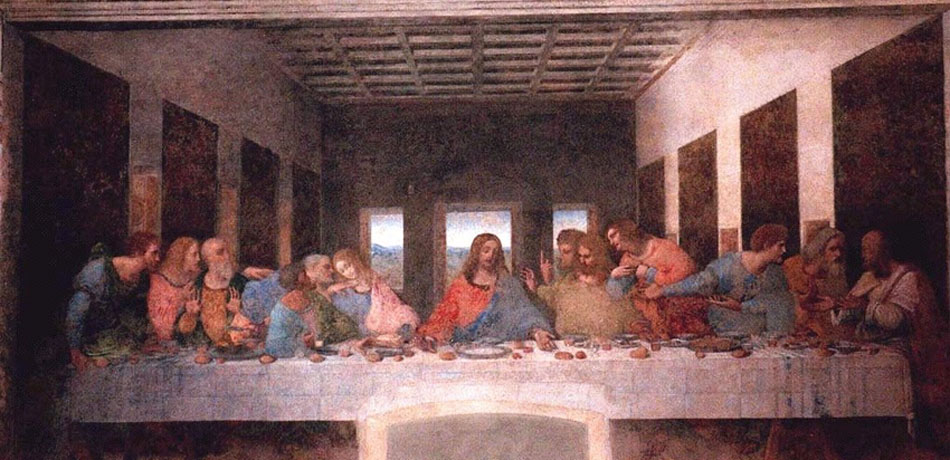
Like George Frederic Handel and Wolfgang Amadeus Mozart before them and Benjamin Britten after them, Hector Berlioz (1830-1869) and Giuseppe Verdi (1813-1901) were theatrical composers. They understood how to reach and hold audiences with theatrical music. They were expert at setting the words of a librettist to music that caressed and warned and ignited those words with real human feeling and sent them flying – sizzling and singing and sighing – into the minds and hearts of men and women everywhere, for all time, even into forever.
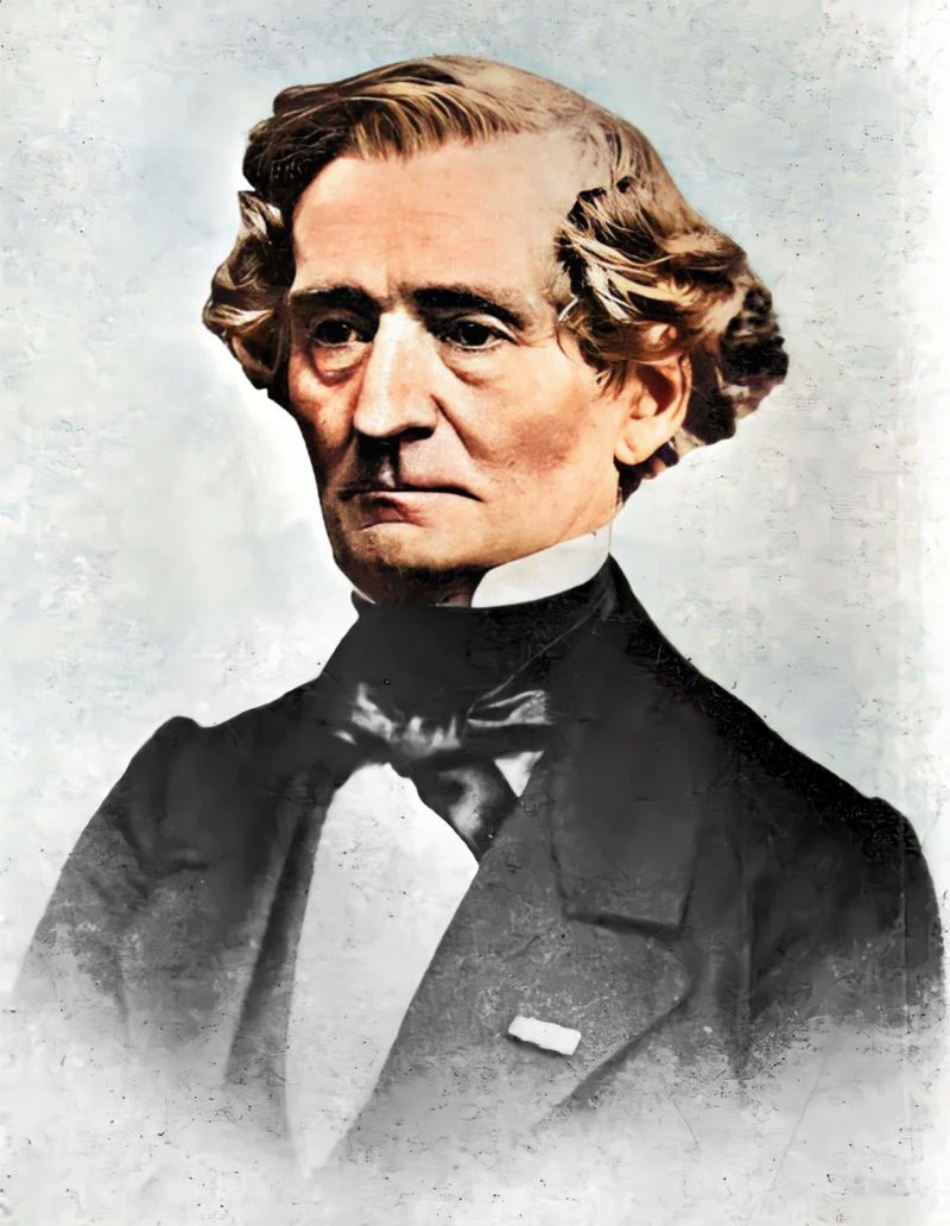
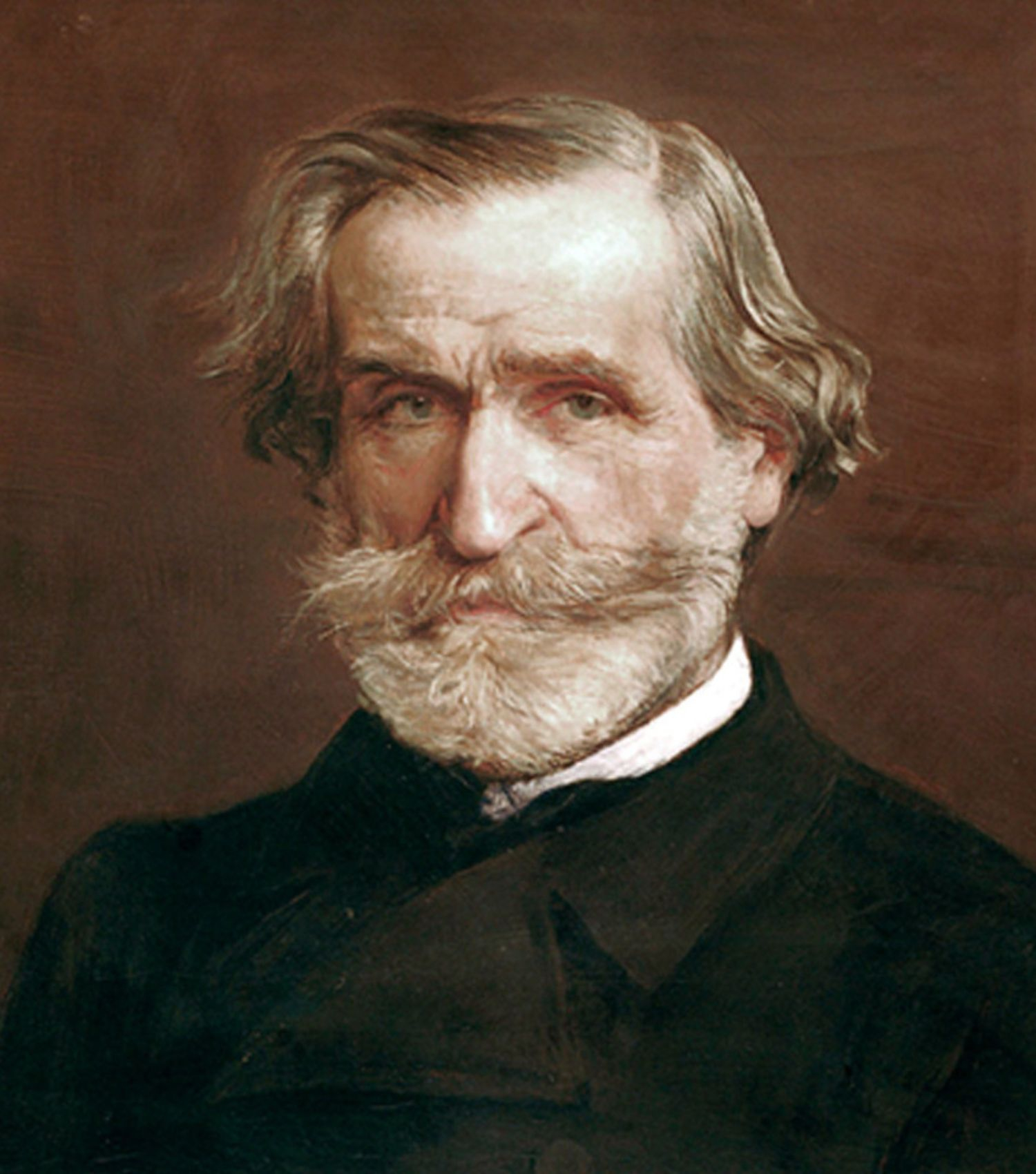
It should not be surprising, then, to discover such great theatrical composers using the same dramatic musical language, employing their same great talent for musical communication when setting sacred texts such as the “Requiem Mass.” In fact, the “Requiem Mass” has had a special attraction for these composers down through the ages for two important reasons. First of all, the text of the “Requiem” – which comforts mourners by praying for eternal rest and peace for their loved ones who have died – has great emotional appeal for a great many people. Secondly, it is the only complete Mass text extant which includes all the parts of a Mass (both the Proper and the Ordinary) and which has endured intact from before the Middle Ages.
Berlioz made sure that even the physical setting was perfect for the premiere performance of his “Grande Messe des Morts.” And Verdi wanted to make his sophisticated audience feel real primitive fear and passion through the power of his new “Manzoni Requiem.” Not only were Berlioz and Verdi operatic composers, but they were also quintessentially Romantic composers. They expressed their own feelings in their music in order to stir the feelings of others. And they did it very effectively. They still do.
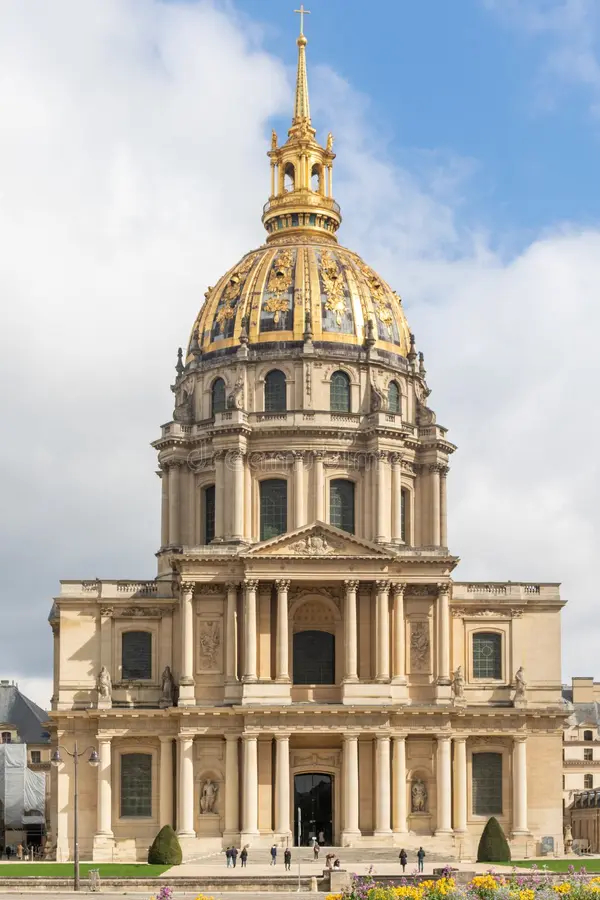
Berlioz’s “Requiem” was first performed on December 5,1937 in the Chapel of St. Louis at the Invalides in Paris. The walls were hung with black velvet and the windows were darkened. Four-thousand pinpoints of candlelight sparkled in the huge, dark chapel.
The music for Berliozs “Requiem” starts out simply and quietly. The Introit and Kyrie are scored for woodwinds, horns and strings and chorus. The Introit begins gently and instrumentally. The repetition of “Requiem aetemam dona eis, Domine… Eternal rest grant unto them, O Lord..” is stronger than the first statement but the music quickly becomes gentle again and much more lyric on the psalm verse, Te decet hymnus.” The third repetition of the “Requiem aeternam” is also quiet and Berlioz changes the words from “dona eis” to “dona defunctis” …. from “grant unto them” to “grant unto those who have died.”
Gentle octaves for clarinets and flutes accompany “et lux perpetua luceat eis… and let perpetual light shine upon them.” The opening words are repeated a fourth time and concluded with a bright D major chord on “luceat” and gentle repetitions of “eis.”
The Kyrie, which follows next, is also hushed. This is fairly surprising but not so surprising as what happens next. The Dies Irae is a most dramatic and frightening medieval addition to a Mass which is otherwise all about peace and mercy and rest. The Dies Irae is therefore, understandably, usually set musically with great dynamic effects especially by dramatic composers like Berlioz. But Berlioz surprises us here by having sopranos – accompanied by flutes in octaves – sing rather sweetly about this “Dies Irae… Day of wrath” Surprisingly, there is no wrath here at all. There is only gentleness. To be so unusually restrained at this very dramatic point of musical composition, this highly theatrical composer must have something very special in mind. This quintessentially Romantic composer must be going someplace exceptionally impressive. Berlioz must be waiting for something. But for what? He certainly has all of us waiting for something.
We listen and discover that the entire beginning of the Dies Irae – scored for chorus with woodwinds and strings – seems to be an introduction to and a preparation for the “Tuba Minim.” That for Berlioz is the moment to announce the “day of wrath” and, therefore we can only imagine Berlioz’ fury when the conductor Habeneck tried to destroy that moment at the premiere by putting down his baton and proceeding to inhale a little snuff. In his wonderful “Memoirs,” Berlioz tells us that he, Berlioz himself, saves the day by leaping up and bringing in the full orchestra and chorus and four additional brass ensembles!
This is the first time in the entire “Requiem” that Berlioz has used the full orchestra and to that he has added four brass orchestral groups and an enormous array of timpani. He had even placed them strategically in the four corners of the chapel – like the four corners of the world – to obtain his desired effect. There could be no more dramatic moment than this! After a huge E flat chord from the full orchestra, the four brass ensembles enter in turn. There is then an even larger E flat chord and the basses alone sing “Tuba mirum spargens sonum… A trumpet pealing marvelous sound” calling all to gather around God’s throne, while the brass echo heavily all around us.
This is not only great Romantic music and stirringly dramatic prayer, it is also a very romantic story, the stuff of which movies are made!
Touches of the dramatic abound in Berlioz’ work. One wonderful touch of orchestration, for example, occurs in the “Sanctus” of his “Requiem.” Throughout the “Sanctus, sanctus, sanctus …. Holy, holy, holy…” the tenor has been echoed by the chorus, like an archangel echoed by choirs of seraphim, or like a leader of song echoed by a faith-filled congregation at Sunday eucharistic celebration. Then with great joy, female and male voices – doubled respectively by high and low strings to powerful effect – sing a triumphant “Hosanna in excelsis… Hosanna in the highest ….”
Then in hushed contrast and with a Romantic’s freedom to change the text, Berlioz moves not to the “Benedictus” but to an unusual and orthodox repetition of the “Sanctus.” The tenor is echoed by the choir again. The celestial orchestration of shimmering strings and gentle woodwinds sounds the same again – with one marvelous difference. Berlioz adds a wonderful touch of timpani and cymbal to the repeated “Sanctus” – like an awesome, distant hint of thunder. And we suddenly find ourselves moved to shuddering and praying and smiling. One simple touch of orchestration can move us so profoundly. It is so dramatic. It is so romantic. And it is so Romantic.
And so is the story – and the music – of Giuseppe Verdi (1813-1901). The only great composer who was also an active farmer, Verdi was also a composer for the theater all his life. His first opera was a comedy, “Un Giorno di Regno,” written in 1840. It was unsuccessful because while he was struggling to write it, Verdi lost his little son, then his little daughter, then his young wife – all in a little more than two months time. Verdi never wrote another comedy until his very last opera, “Falstaff,” which he wrote fifty-three years later when he was eighty years old. In between these two comic operas, there is a wonderful world of passion and pathos, many dramatic and melodramatic operas and the “Manzoni Requiem.” There is a world of passion and pathos in the “Requiem” alone!
In fact, Verdi’s “Requiem” might well have been his final composition. The great composer decided to stop writing operas and retire to the farm. He made this decision because he was so greatly disappointed that young Italian opera composers who, Verdi believed, should be continuing the magnficent vocal tradition of Palestrina and the Italians were, instead, imitating the heavy orchestral writing of Wagner and the Germans. So, after the “Requiem” Verdi stopped writing. He would not have written another opera had not Arrigo Boito lured the old master out of his agricultural exile with irresistible librettos for “Otello” and “Falstaff,” Verdi’s last two masterpieces.
Verdi’s “Requiem,” his great sacred masterpiece is unquestionably theatrical. It is also unquestionably powerfully passionate and sincere, being dedicated as it was to the memory of one of Verdi’s closest and most admired friends, the poet Manzoni. Verdi and Manzoni were fervently involved in the politics of Italian unification. In fact, the letters VERDI were used as a mnemonic cry for Vittorio Emanuele, re d’Italia, Victor Emanuel King of Italy – Italy united! Manzoni died May 22, 1873. The “Requiem” Verdi wrote in his honor was first performed in the Church of St. Marco in Milan on May 22,1874. Verdi conducted a personally selected orchestra of one hundred musicians and a chorus of one hundred and twenty.
Verdi’s “Requiem” begins dramatically with grief-stricken whisperings. Gentle chords for muted strings insinuate themselves into our consciousness in the Introit’s prayer for rest. For sixteen measures in A minor, the chorus prays for rest sotto voce, “Requiem aeternam dona eis, Domine… Eternal rest grant unto them, O Lord…” Then they move into A major as they sing, “Et lux perpetua luceat eis… And let perpetual light shine upon them…” Then four descending notes fall like a compassionate blessing. For all the pain of grief, there is still hope.
This is clearly audible when the solo voices enter with the ‘Kyrie” which may well be the most moving passage in all of Verdi’s works and which is certainly one of the greatest moments of human pathos in all musical literature. It is perhaps more audibly moving coming as it does after the Renaissance-like psalm verse, “Te decet hymnus,” scored by Verdi for unaccompanied chorus, and the somber repetition of the “Introit” antiphon.
A tenor solo sings, “Kyrie eleison” with a strong, clear, decisive melody. He is in the key of A major. The bass soloists begins “Christe eleison” on the dominant e. The soprano soloist sings, “Kyrie eleison” and the mezzo-soprano answers with “Christe eleison.” Verdi is in the midst of what seems to be a double fugue. Is this a homage to Moan’s great double fugue ‘Kyrie” in his “Requiem’?
Various voices of the chorus begin returning questions and answers with the four soloists at measure seventeen, sometimes answering, sometimes questioning, sometimes underscoring the same melody as a solo voice. At measure forty-two, sopranos, tenors and basses subdivide into two sections each for even greater color and strength of harmony.
And what dramatic strength and rich color there is throughout Verdi’s “Kyrie,” brilliant with the melodic sweep of his lush romanticism. Written in 1874, it is therefore rather
late and great Verdi. There is much chromaticism; there are many tones borrowed from parallel minors; there is much modulation. ‘there is also the surge of Verdi’s great human drama without superficiality. This “Kyrie” of his is a sincere, fiery brilliant, earthy prayer that someone, somewhere must have mercy. And, finally, voices implore softly at the end, “Kyrie eleison…Lord have mercy…” and conclude unusually but perhaps more warmly and humanly with, “Christe eleison… Christ have mercy.” There are gentle strings. There is serenity. There is rest.
And then, with four sudden, thundering chords of the full orchestra, there is the frightening, pounding fury of the beginning of the “Dies Irae.” Verdi’s is a scene of judgment far more real and far more frightening than Michelangelo’s in the Sistine Chapel. Verdi’s ingenious use of rhythm especially forces the fears of human beings to stand shivering before the demons of death. The eerie mystery is deepened by Verdi’s use of chromatic melismas for second sopranos, altos and tenors while first sopranos and basses sustain a Gas a pedal point. Verdi very much wanted the jaded, sophisticated theater-goers in attendance at his “Requiem’s” premiere to feel the primitive fears felt by our ancestors in caves. And he succeeded And he succeeds.
Personally, passionately, dramatically, romantically, prayerfully, Verdi succeeds. And, once again, in another style, another place, another time, God who is in every style, every place and every time – once again, God is in the gentle wind