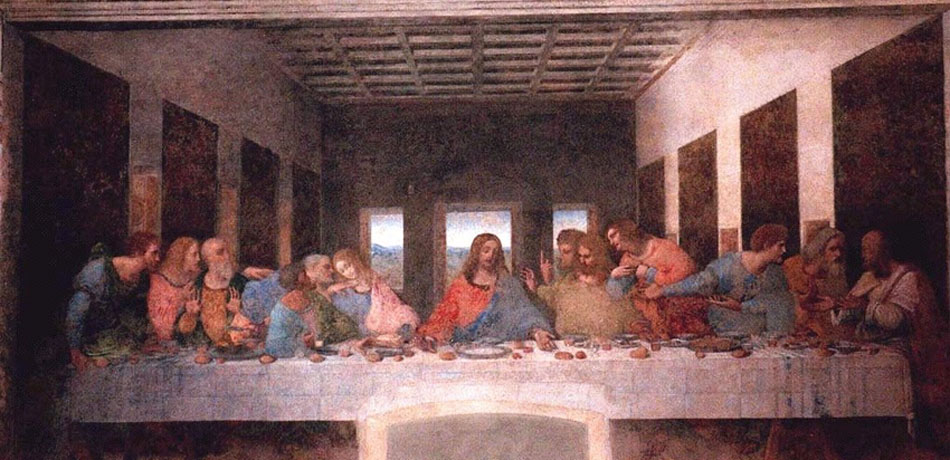
“In the beginning… God said, ‘Let there be light.’ And there was light And God saw that it was good.” So the Creator moved through the pages of Genesis and would continue to move through all the ages of the world. So, down through the ages, have artists caught fire from that light and have, according to their own lights, created new and varied lights, lights of dramatically different colors and intensities.
From the cave artists to the modern abstractionists, men and women – human beings created, creative and creating in the image and likeness of God – have always heard and seen more than the literalness of materiality in music and art. This may seem more obvious to us when we look at some modern styles of art such as impressionism, expressionism and abstractionism. But it has always been true.
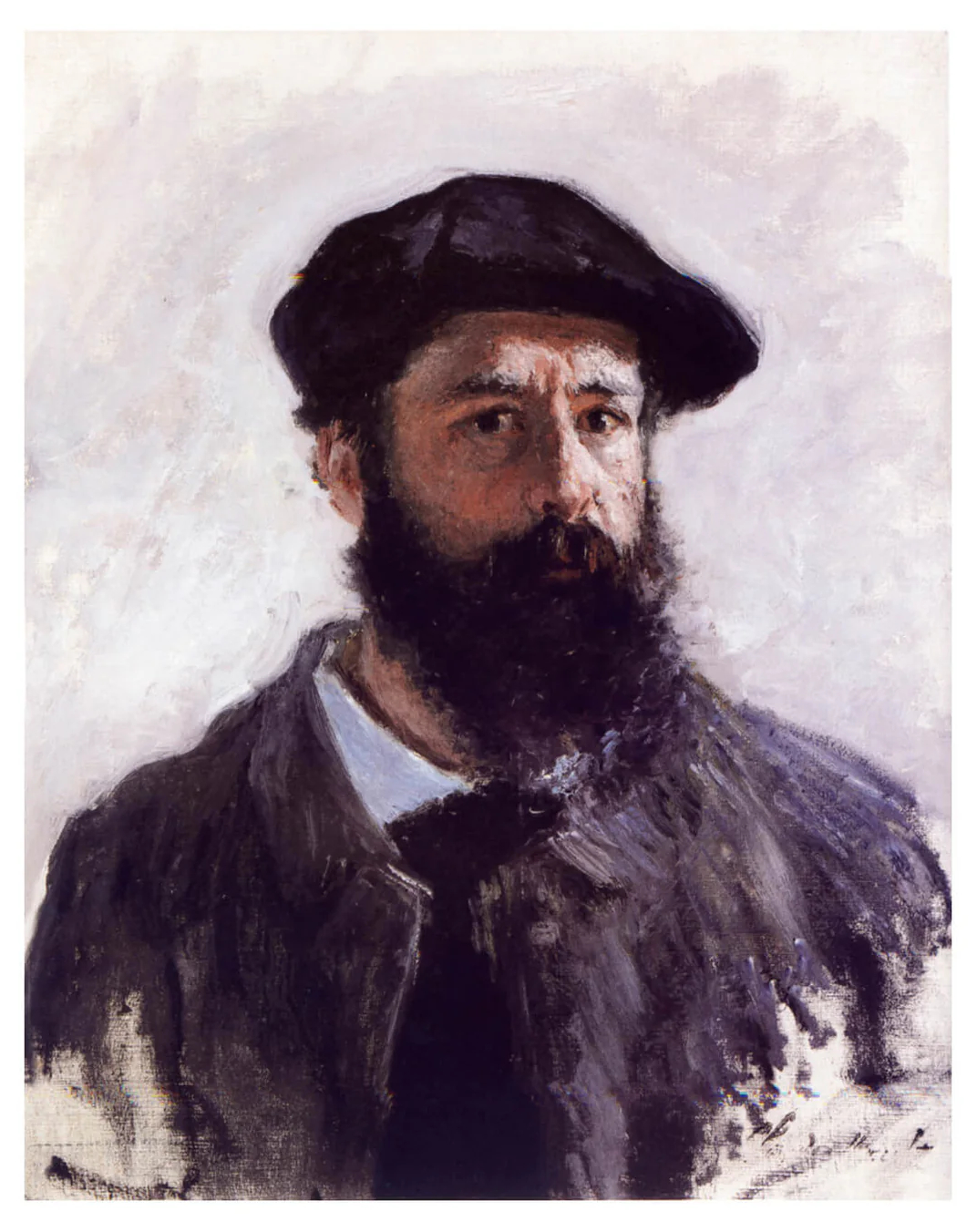
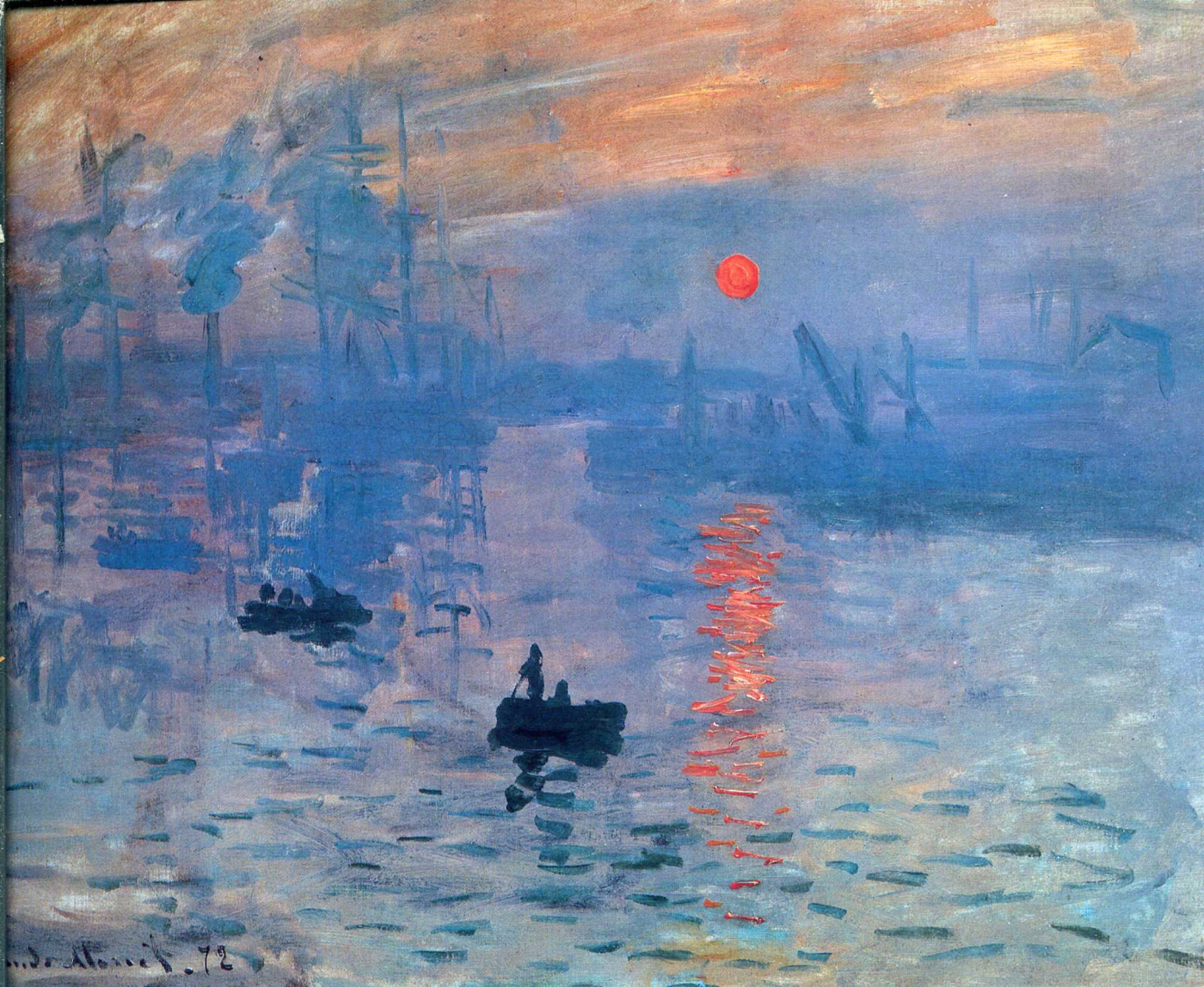
Claude Monet (1840-1926) exhibited a painting in 1874 which he had entitled: “Impression: Sunrise.” A critic who found the work ridiculously less finished than wallpaper, sarcastically mocked the artist’s style as “impressionism.” The pejorative term stuck. It was only later that impressionism was more positively interpreted to indicate a style of art which gives the viewer an “impression” of something in the very process of being seen, something vibrant and evolving and alive, not something absolutely complete and concretized.
Monet painted a whole series of paintings of the West facade of Rouen Cathedral, (Ed. note: see photo of Rouen Cathedral) capturing the constantly shifting patterns of light at all different times of day, in all different seasons and climatic conditions. What once seemed an absolutely complete and concrete image is wondrously revealed to be something in a constant state of flux. His palette thick with colors, Monet paints the same West facade from virtually the same angle every time, but it is never ever the same. One minute, the stone of the Cathedral is steamingly misty, shimmering hot in bright, white and yellow, August sunlight. Then, we see that the stone is really cool and blue in the early morning light of April. No, it is brown and warm and massive on an October evening. We look again and find that the facade is definitely gray and shivering on a cold, wet December afternoon. No, look, the Cathedral is brilliantly white and glowing. It must be Easter morning.
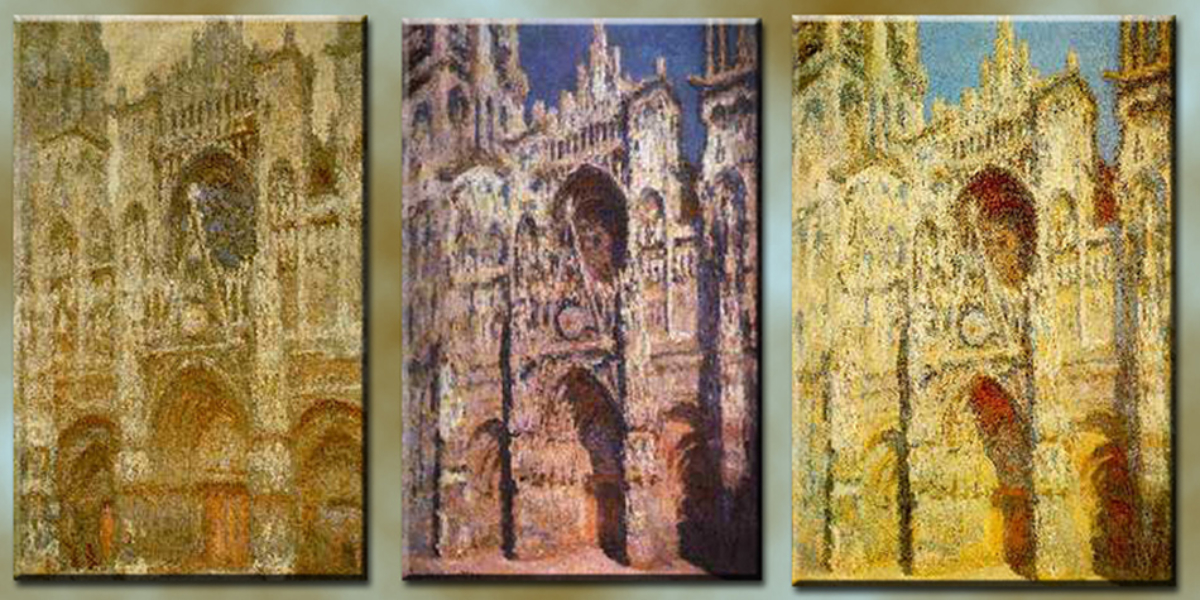
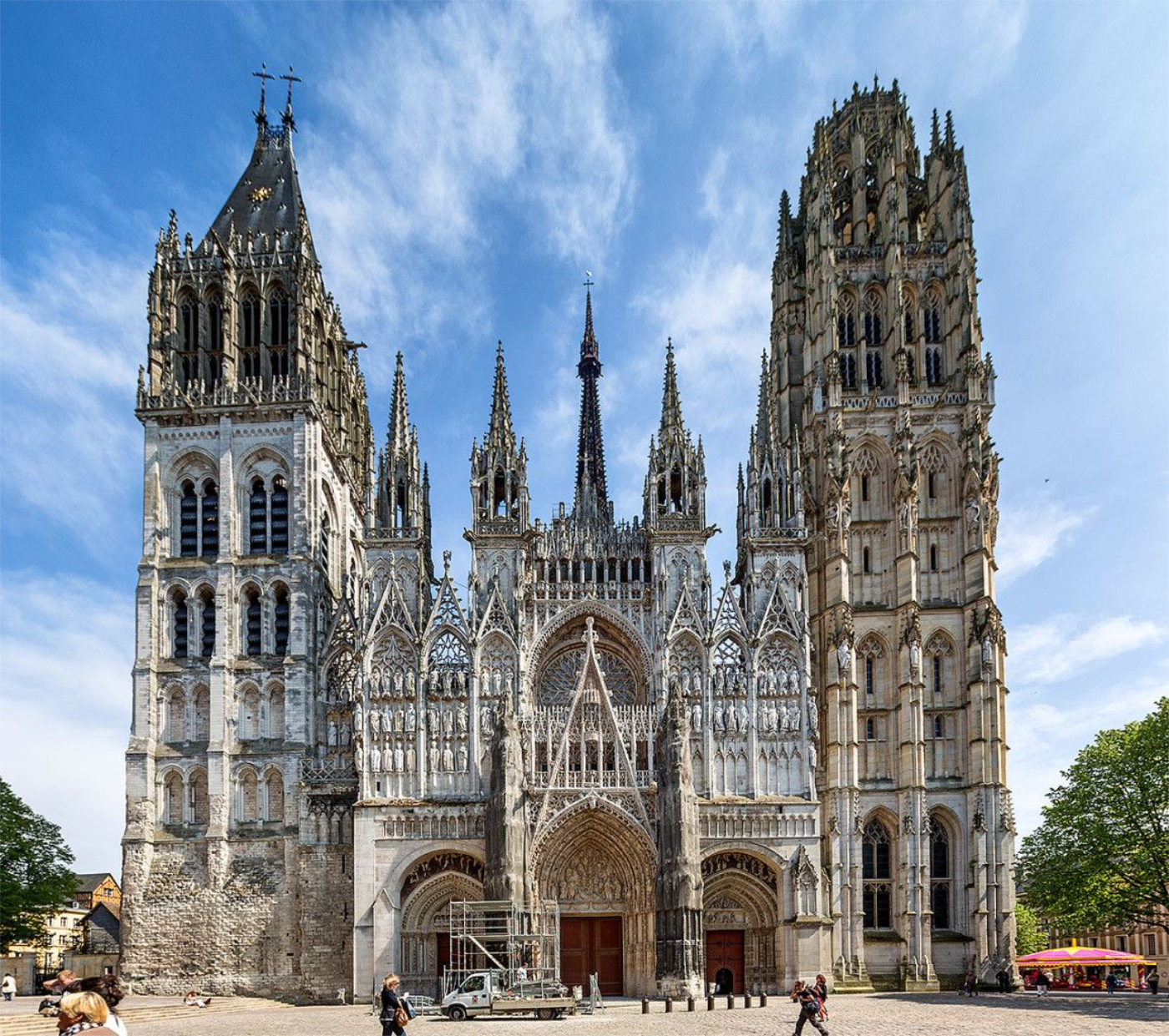
Is God in this Cathedral as in a hurricane or an earthquake or a fire… or as in a gentle, whispering wind, warm and alive and moving? Monet’s impressions of the matter can open us to a new and refreshing experience, warm and alive and moving.
So can the artistic expressions of Georges Rouault (1871-1958). Rouault was a deeply religious person, and he expressed his faith in paintings that are, at once, both starkly childlike and profoundly compassionate. The expressionist is more focused on revealing subjective feelings than on depicting objective appearances. Rouault feels and expresses real empathy for the prostitutes and clowns in his paintings. He feels and expresses a very special empathy for Jesus.
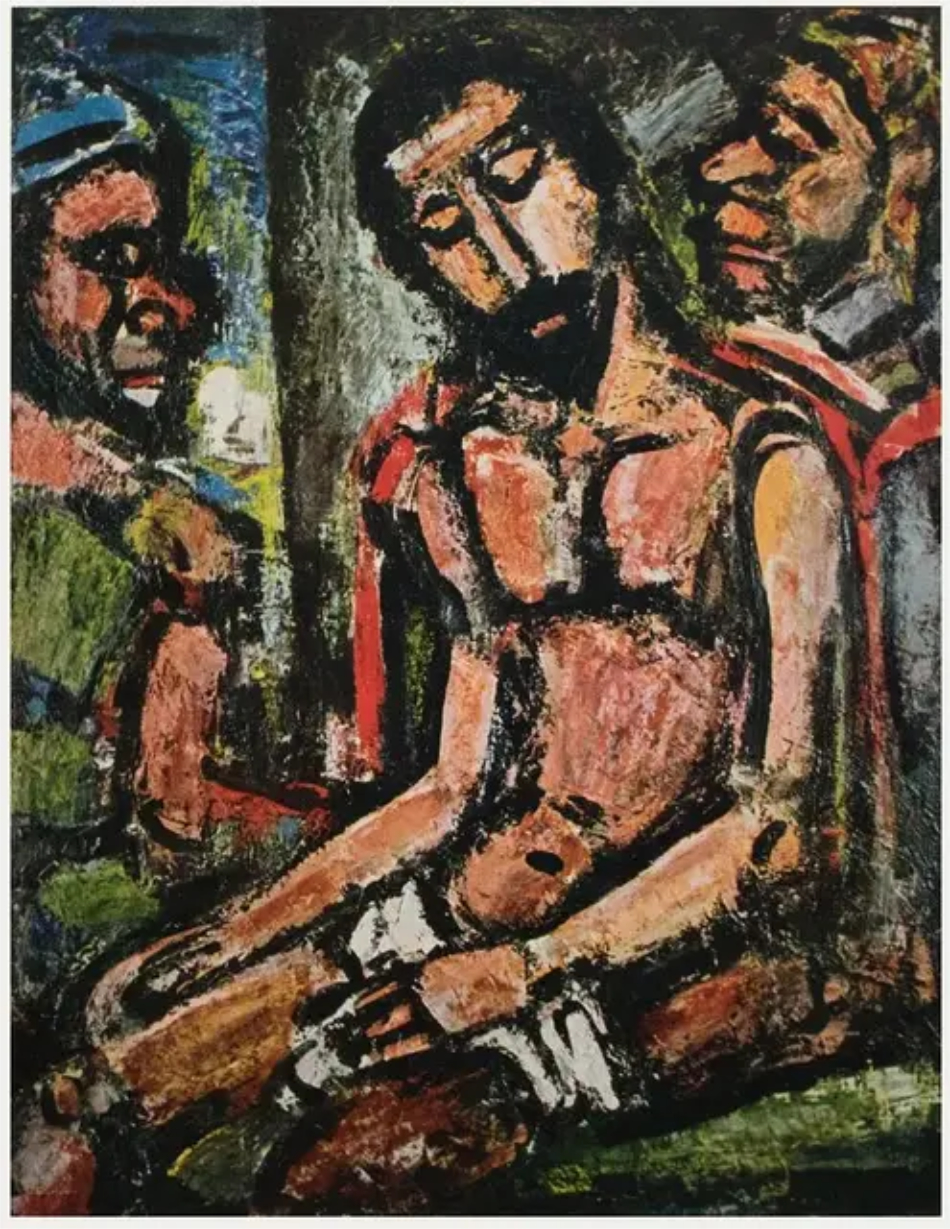
Rouaulfs “Christ Mocked by Soldiers” (1932) reveals deep feelings in the heart of Jesus. Concerned more with emotional expression than realistic representation, Rouault paints feelings of patience and resignation, humility and gentleness in Jesus, who is being persecuted by Roman soldiers who do not know what they are doing and are being very ugly about doing it. Rouault paints a Jesus who says, “Come to me all you who labor and are heavily burdened and I will give you rest. Take my yoke upon you and learn from me for I am gentle and humble of heart.”
Rouault, himself, does learn from this Jesus. He learns to follow Jesus. He learns to pray. He learns to endure persecution for justice’ sake. He learns to forgive for the sake of love. He learns to say with Jesus, “Father, forgive them for they know not what they do.” Rouault paints to express his faith and his feelings. Rouault paints to help others learn from Jesus. Rouault paints to help others feel their feelings and experience their faith as well.
Rouault paints Jesus as the gentle savior sits, stripped and beaten by Roman soldiers at the command of Pontius Pilate. The Roman procurator had decreed with strange logic and a stranger sense of justice, “I find no guilt in this man. Therefore I will have him scourged and let him go.” The chest and abdomen and arms of Jesus are deep burning shades of red. His face is pale and bowed in prayer and fatigue. His eyes are closed in patient resignation. A blood-red cloak has been thrown over his shoulders as a mock -regal cloak.
Soldiers slap Jesus from all angles and taunt him to prophesy which one of them slapped him last. They ridicule his kingliness and crown him with a crown of thorns. Rouault paints only two soldiers, one to the right and front of Jesus and another behind his left shoulder. Both soldiers have faces which look heavy and coarse and utterly uncomprehending – especially when contrasted with the refined and delicate face of Jesus. The two soldiers stare at Jesus, whose eyes are closed. But what do they see? And what does he see? What do they feel? And what does he feel?
Rouault emphasizes the solidity of the three bodies by heavily outlining sections of them with thick, dark black lines. The strong colors – the red of Jesus, the green of the soldier at his right and the purple of the soldier behind him at his left – and the heavy black outlining remind us of the stained-glass art with which Rouault had begun his apprenticeship and his career. Throughout his life, Rouault continued as he had begun, creating images which were wonderfully strong and simple visually and deeply expressive and involving emotionally.
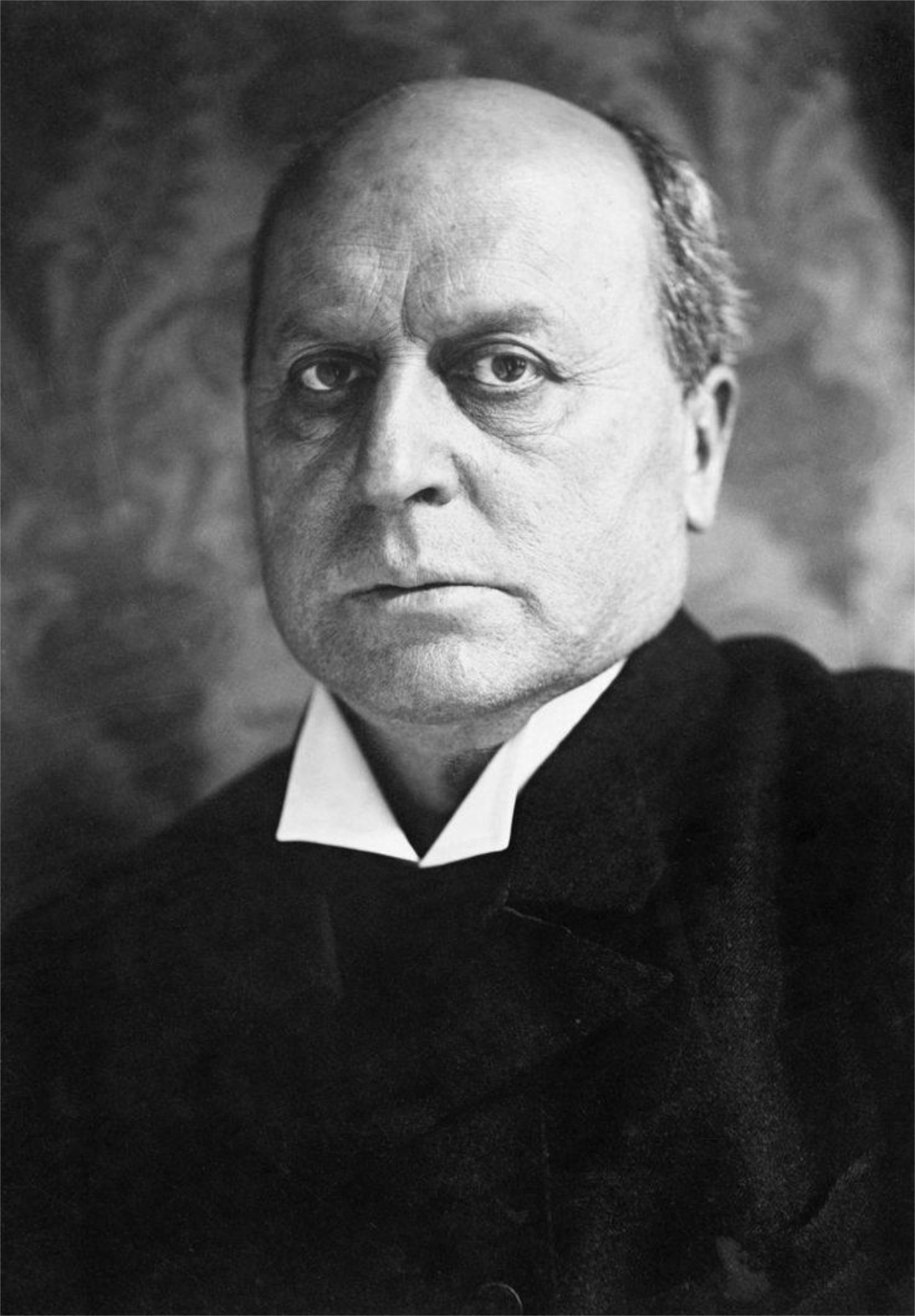
Wassily Kandinsky (1866-1944) felt a profound “inner necessity” to change radically, to go, in his painting, far beyond external appearances in order to be able “to touch the beholder’s soul.” He wrote about this “inner necessity” in 1911 in his “Concerning the Spiritual in Art.” Kandinsky moved from representational art to abstract art. He called his paintings “Compositions” and “Improvisations.” Kandinsky claimed that he heard music when he saw color. And, indeed, his abstract art echoes the non-representationality of the art of music. His freedom in painting echoes music’s freedom from materiality, music’s spirituality.
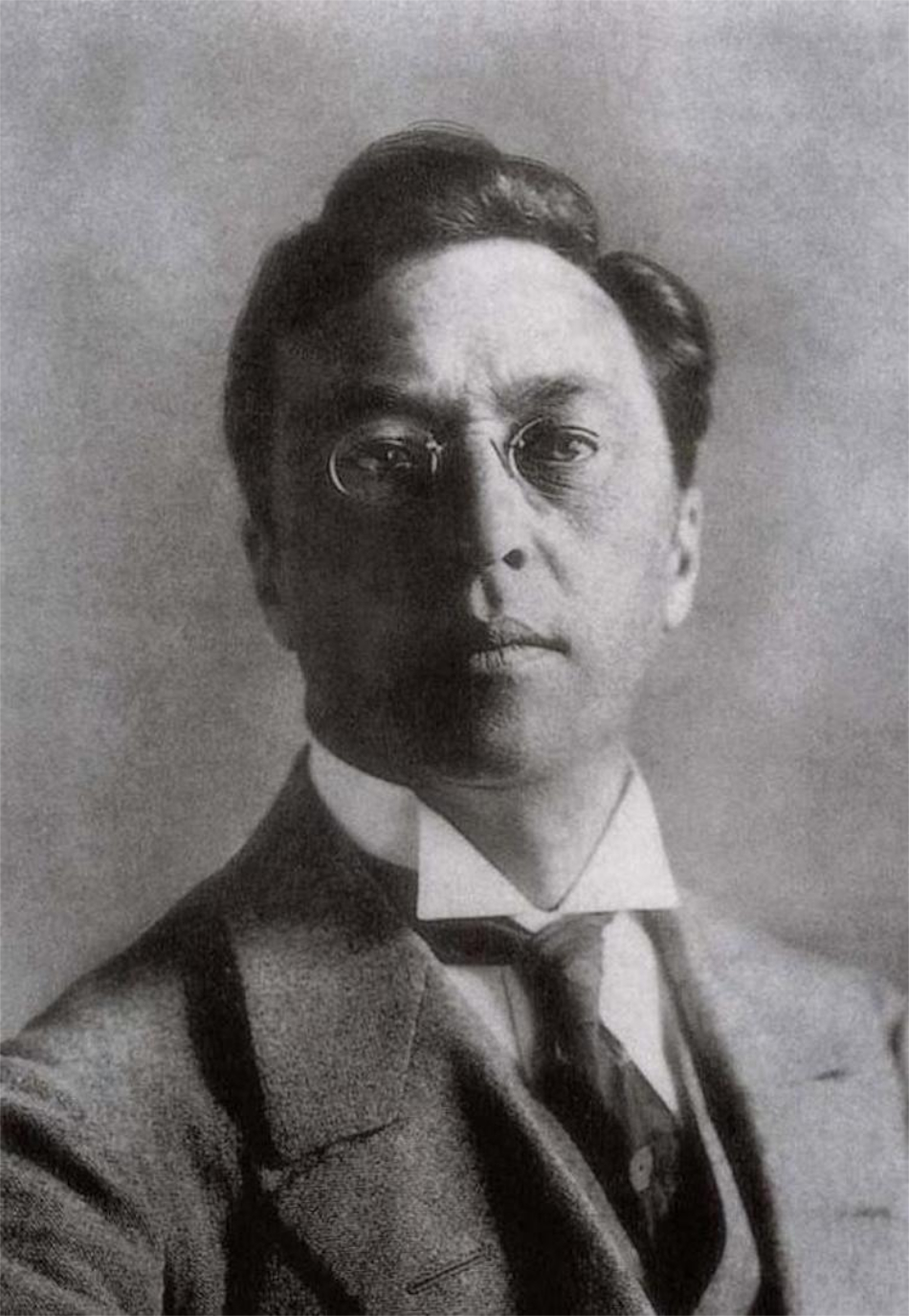
Kandinsky was a deeply spiritual man and was committed to his artistic vocation to lead his sisters and brothers to spiritual enlightenment through his abstract paintings. This, of course, puts demands on the viewer; more demands than most viewers want from artists. We can walk by abstract art as people walk by beautiful wallpaper. We might simply nod and smile at some delightful design or striking coloration. Or, as Kandinsky might hope, we can view each work of abstract art as unique and encounter it, contemplate it, pray over it, feel with it and within it.
We look, for example, at Kandinsky’s “Accent in Pink” (1926) and we can soar into cosmic space or float into an even deeper space within us. We can feel terribly small, a speck on stage for a second, an utterly insignificant part of a world far more vast than we are. Or, on the other hand, we can feel ecstatic to be even a small part of an enormous creation, here for a very special, wonderful, precious moment of time.
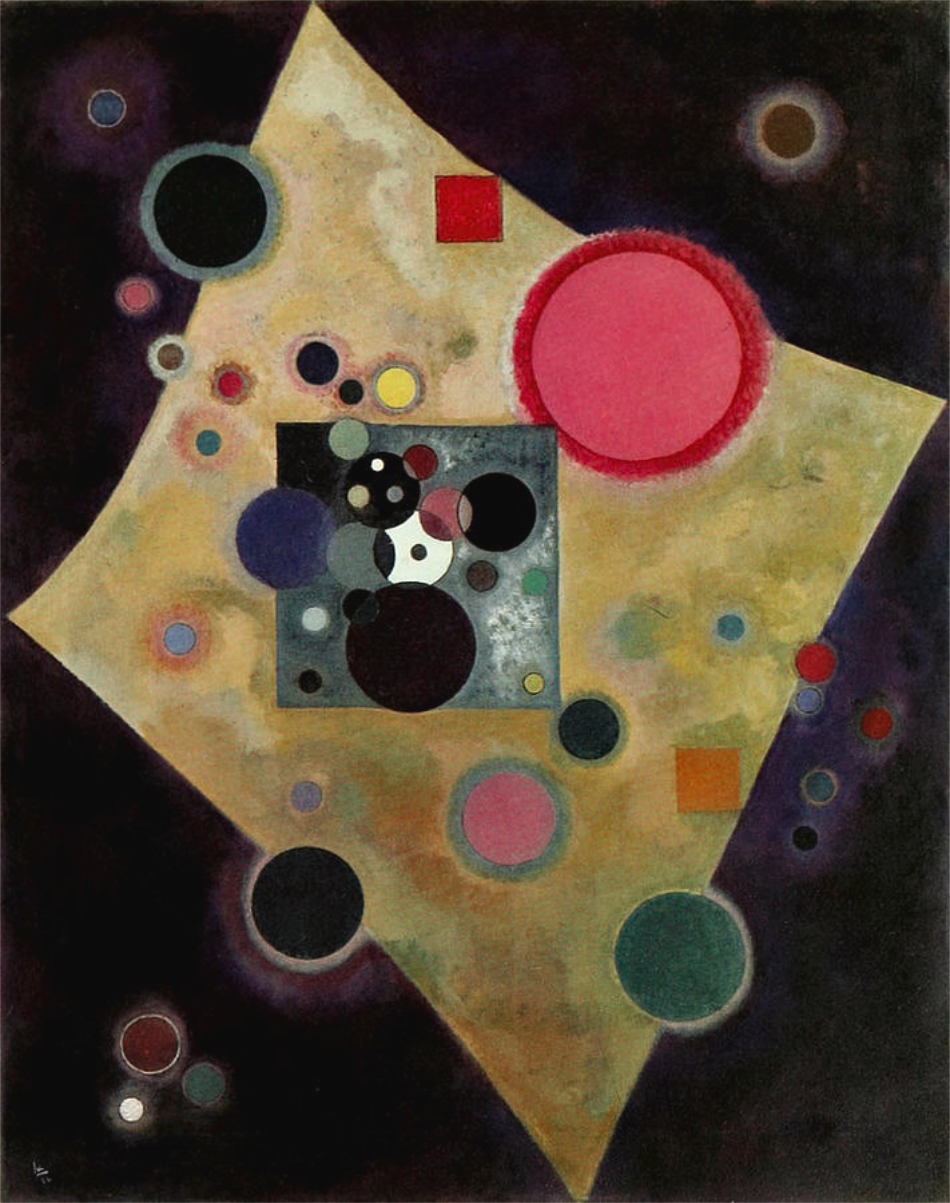
We can reflect upon relationships as we encounter the various shapes and colors on the canvas before us. We can reflect upon our relationships with ourselves, with others, and with God. We can sense a golden window – or feel a flying carpet beneath our trembling limbs. We can comprehend centers and ponder peripheries. We can delight in possibilities and surprises, hopes and dreams. We can explore our hearts, so dynamically filled with memories of the past, celebrations and struggles of the present, fears for and faith in the future.
Kandinsky’s “Accent in Pink” does not tell us what to think. It does not tell us what to feel. It does not even tell us what to see. It is not a visual representation of something we should recognize. It is, rather, an opportunity to encounter and enjoy some aspect of life in a refreshingly new way, a fleeting way, a deeply spiritual way.
Even in modern times – and even as modern as modern times are going to get, and as modern as modern art and music are going to get – if we are open to the opportunity, the sacred can still reach us through works of music and art. God is, after all, even in modern times, not in the hurricane, not in the earthquake, and not in the fire. God is, for us today as God was for Elijah ages ago, in the gentle, whispering wind.