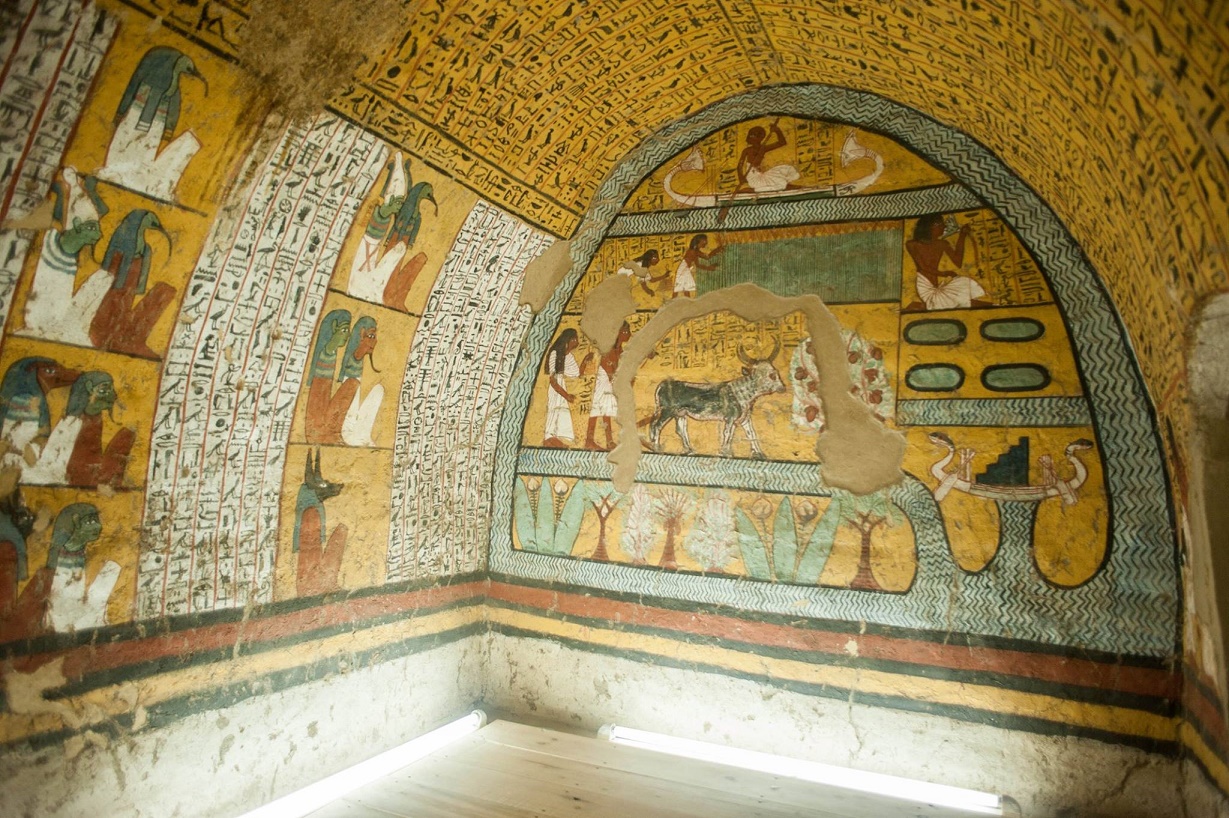
The young pharaoh’s tomb has been packed painstakingly for his journey into forever. He will be eternally happy in the world beyond this world only if he has with him all the things he enjoyed here. So his tomb is packed as if it were an enormous, elegant suitcase. There are, first of all, actual physical objects the young man was fond of here and would undoubtedly want with him hereafter: jewelry, vases, clothing. But then, what of all the things he loved that cannot be contained in a tomb: the people, the animals, the waters, the trees, the birds, the skies, the sun and the stars? How empty life would be for him, for any of us, without them. How can they be placed in his tomb for his journey?
The Egyptians had a wonderful solution: paintings. Like the paintings in the Paleolithic caves, the paintings in Egyptian tombs were not meant to be decorative or simply beautiful in themselves. These were obviously not seascapes over sofas in living rooms or enormous abstractions in modern museums. They had a much more highly pragmatic, though not unrelated, purpose. These paintings in Egyptian tombs were an ingenious physical means to an eternal spiritual end.
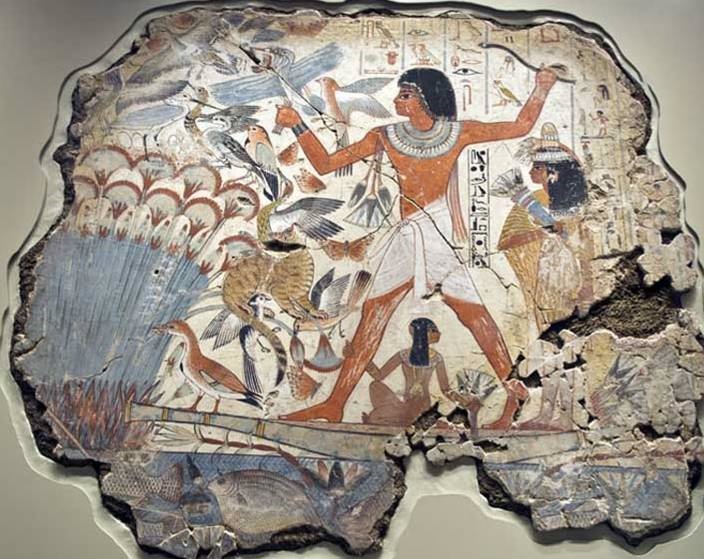
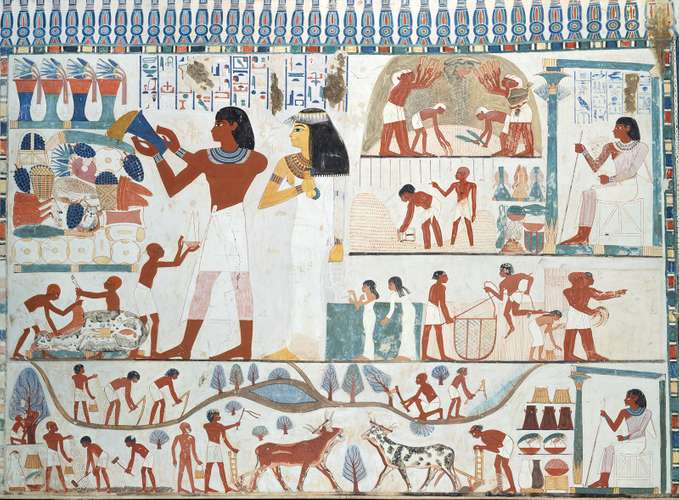
The young pharaoh could have the pond and the fish and the ducks and the trees which he loved so much here, with him there in his afterlife as well. We would simply paint the pond and the fish and the ducks and the trees on the wall of his tomb. They would be his forever. And, lest there be any doubt about the exact identity of each and every object painted, each and every object would be painted in its most easily recognizable perspective. The pond would be drawn from an aerial view to make sure it would be recognized as a pond But each tree around the pond would be painted in a frontal view- not an aerial view, so that each tree would look most clearly like a tree. The fish in the pond would not be visible from an aerial view since they would be deep down under the waters. So each fish would be painted on the surface of the water, as if floating on its side. That way each fish would be most readily perceived to be a fish. The same would be done with the ducks. The whole picture would look something like this.
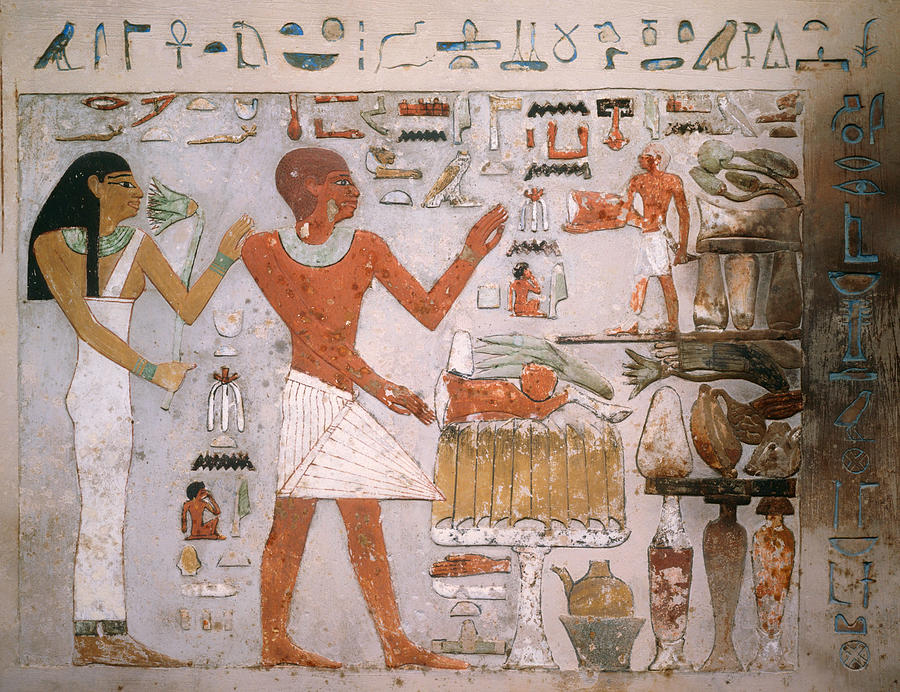
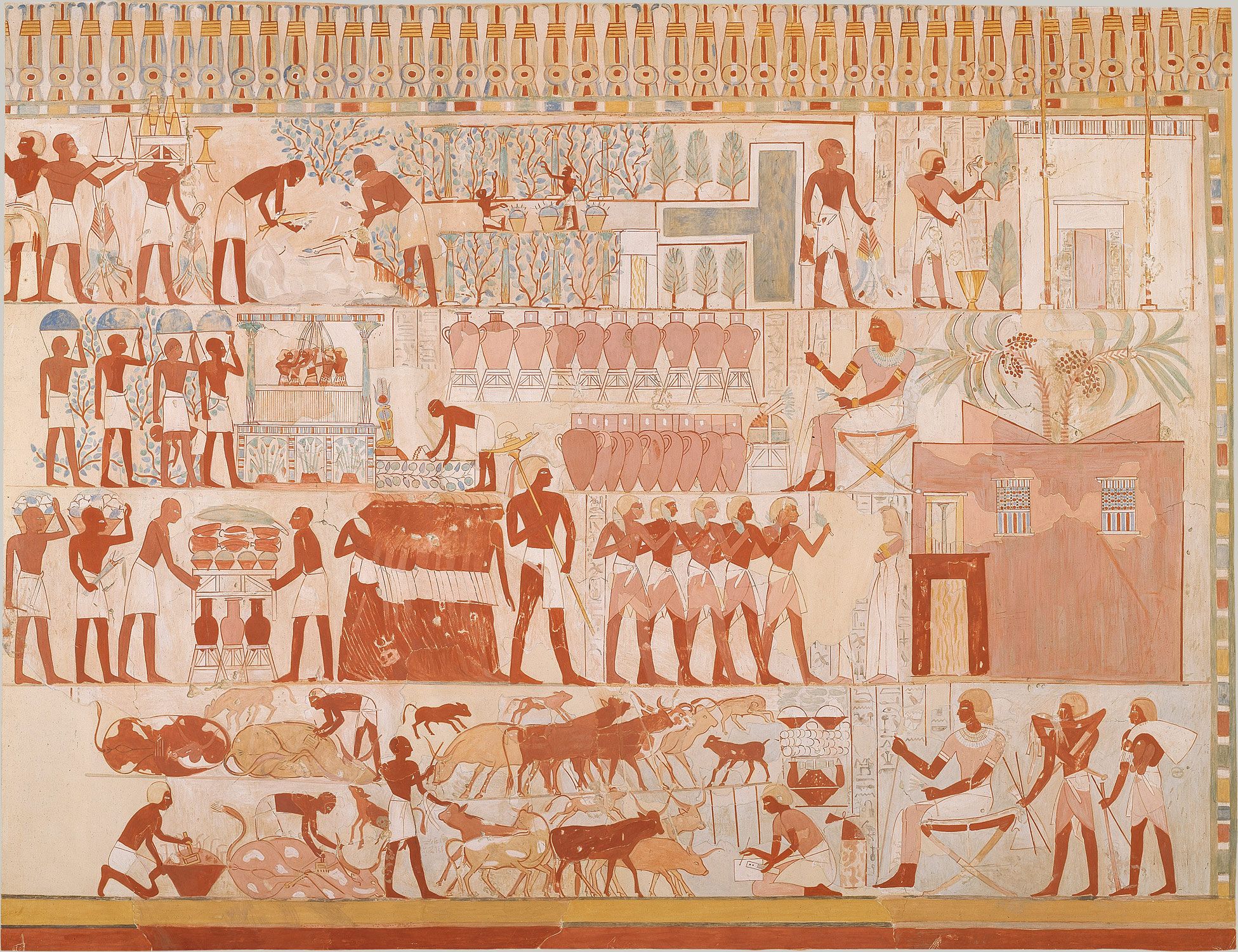
Obviously, the perspectives of the various objects are inaccurate when all the objects are brought together in the one picture. Obviously that did not matter to the Egyptian artist. The Egyptian artists were good at proportion and perspective in drawing. But this was not their goal in these tomb drawings. The perspective of the whole picture did not matter to them here. What mattered to them was that the perspective used for each individual object would render that object most clearly recognizable as itself. The painting was a symbolic objectification of something material being carefully packed for a mysterious, spiritual journey. It was a journey, obviously, which none of the painters had yet made personally. But they believed They knew what it was all about. They had heard God in the gentle wind. They were wonderful painters and very thoughtful packers!